






Safety & Security
A Roller Door Feels Heavy or Slams Shut: What to Do Next

Sep
Reviewed and updated: 14 October 2026
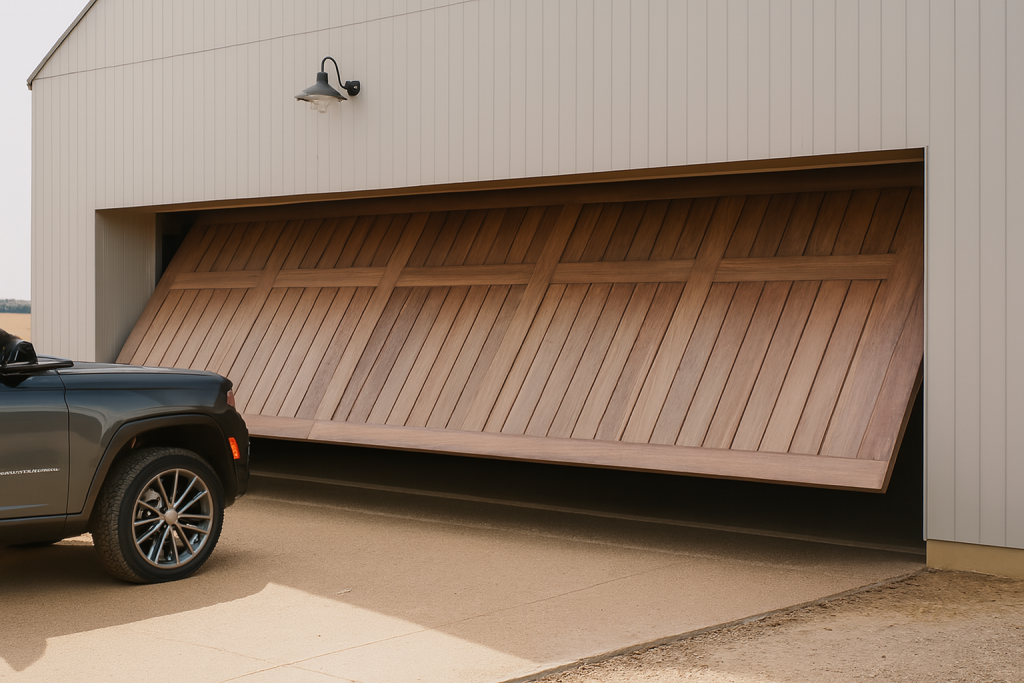
A roller door that suddenly feels heavy, drops faster than usual or slams shut has changed from an everyday convenience into a safety concern. It may still move when the button is pressed, but that does not mean it is safe to keep using. The door and opener are designed to work as a system. When the door’s movement changes, the safest response is to stop trying to correct it at home and arrange a professional assessment.
This is particularly important when the issue is described as ‘tension’. A homeowner can notice symptoms, but the source of those symptoms cannot be confirmed safely from the ground. Springs and other counterbalance components can be under load. Adjusting them, disconnecting the opener to test the door, or running the door repeatedly can make an already unstable condition worse.
Recognise the warning signs
Normal roller-door movement is generally consistent. A door that takes noticeably more effort than it used to, closes too quickly, sounds different or appears uneven deserves attention. Other signs include a sharp bang before the problem began, a curtain that does not travel smoothly, an opener that appears to labour, or a door that does not reach its usual open or closed position.
These signs do not prove one particular fault. A heavy door is not a licence to diagnose a spring, and a fast-closing door is not something to compensate for with the remote. The relevant point is that the system is no longer behaving predictably. If you are unsure whether it is safe, treat it as unsafe until it has been assessed.
Do not test the door by hand
Advice to disengage an opener and see whether a roller door is ‘balanced’ can expose people to a moving door and loaded components. Do not pull a release cord simply to investigate, do not try to wind or unwind any component, and do not add force by pushing the door. Avoid making adjustments to settings in the hope that the opener will overcome the problem. An automatic opener should not be used to mask a mechanical fault.
Keep children, pets, vehicles and stored items clear of the opening. If the door is partly open or appears unstable, do not stand beneath it and do not try to hold it in place. Use another safe entrance to the home where possible. If a vehicle is trapped inside, tell the service provider that access is affected rather than taking risks to move the door.
Make the area safer while you wait
The first practical task is simply to create space. Remove portable items from the door’s travel area without reaching around or under a moving door. Keep people from walking through the opening and do not park close to a door that may move unexpectedly. If safe to do so without operating the door, take photographs that show the visible position of the curtain and any obvious external damage. Photos should be taken from a stable position, not from beneath the door.
Write down what happened before the issue began. Did the door change behaviour suddenly? Was there an impact, a power outage, a new noise or an earlier period of rough movement? Does the problem occur when opening, closing or both? This information is more useful than attempting a repair because it helps the technician understand the sequence of events.
Give the technician the right details
When booking an assessment, provide the door type, the symptoms you have observed and the opener model if you can safely read it. The model is usually shown on the motor unit. If a Merlin opener is fitted, the owner manual is a good reference for normal control information, but it should not be used as a substitute for a mechanical inspection where the door is heavy or unstable.
Describe the condition plainly: ‘the door began slamming shut’, ‘it feels heavy’, ‘the motor runs but the curtain does not move normally’, or ‘there was a loud bang’. Avoid telling the service provider what you think needs replacing. The assessment should determine that. It is also sensible to mention whether the door is closed, partly open or preventing safe vehicle access.
Why prompt assessment is the sensible option
A roller door is a large moving part of the home. The priority is to return it to predictable operation without exposing anyone to a preventable hazard. A professional assessment can consider the door, its counterbalance arrangement, guides, curtain and opener together. That is different from changing one setting or one part in isolation.
Once the immediate issue has been resolved, keep a note of the door and opener model, any manuals and the symptoms that led to the service. If movement changes again, that record makes the next conversation easier. For Merlin-specific support, use the exact manual or Merlin Australia’s homeowner support resources. For a roller door that feels heavy, drops quickly or behaves unpredictably, leave the diagnosis and mechanical work to a qualified garage-door technician.
Sources and support
Merlin’s Australian homeowner support includes model-specific manuals and service guidance: Merlin homeowner support. For Eastern Garage Doors contact details, see Eastern Garage Doors.