






Repairs & Maintenance
Keeping a Roller Door in Good Condition: Safe Owner Checks

Apr
Reviewed and updated: 14 October 2026
A roller door does a lot of work in an ordinary week. Keeping it in good condition starts with sensible observation and everyday housekeeping. It does not mean taking on work around springs, cables, brackets, tracks, force settings or electrical equipment. Those parts are connected to a moving, loaded door and need professional attention.
Make observation part of normal use
The useful owner check happens while the door is being used normally. From a safe standing position, notice whether it looks as it usually does when closed and whether it completes an ordinary cycle without unexpected noise, shaking or a change in travel. There is no need to make the door repeat its movement to investigate a concern. If a change is clear, stop operating it and record what happened. A one-off rattle, a door that sits differently when closed, or a control that behaves differently can all be worth reporting even when the cause is not obvious.
Keep the doorway and threshold clear
Leaves, branches, garden tools, bikes, cartons and loose mats can collect around a garage opening. Clearing these items away from the path is safe routine care when the door is stationary. It helps preserve access and reduces the chance that ordinary clutter will be mistaken for a mechanical fault. It is not an instruction to reach into guides, rollers, tracks or the underside of a moving door. If debris is trapped in a place that cannot be reached safely while the door remains still and fully clear, leave it there and arrange advice.
Look beyond the threshold as well. Storage should not lean against the inside face of the door or occupy the area where it travels. A parked vehicle needs enough room for the door to operate without contact. The aim is to give the system a clear, visible opening, rather than to test how it reacts to an obstruction. Where pets or children use the garage, build the same clear-opening habit into the household routine.
Notice visible condition from a distance
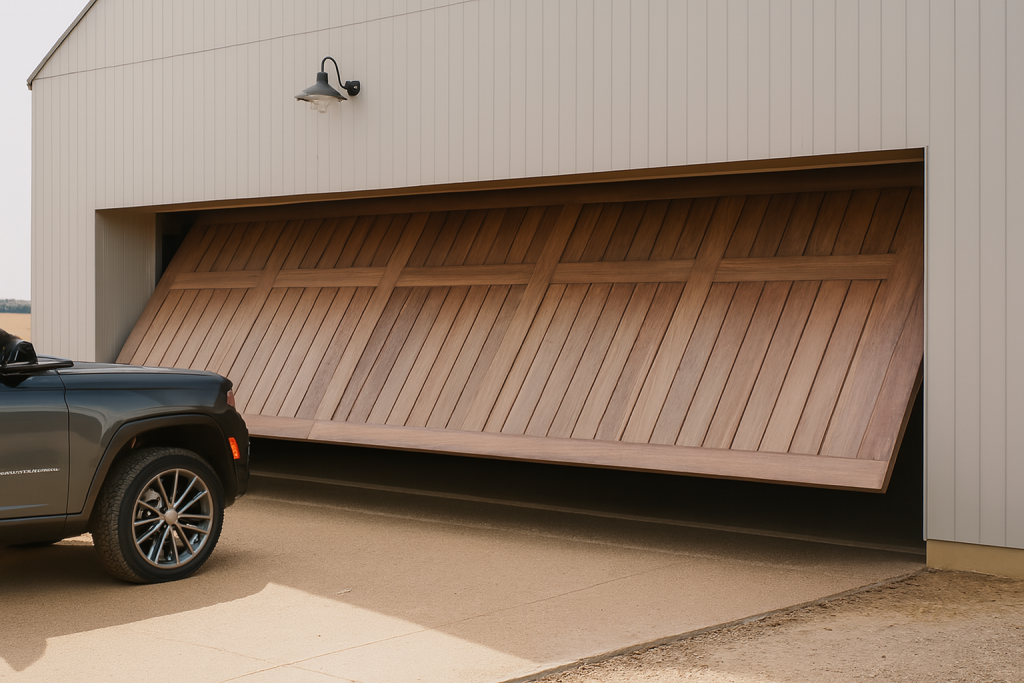
Exterior observation can be valuable after a storm, vehicle contact, building work or a change in how the garage is used. With the door closed and no one operating it, look for plainly visible dents, loose-looking panels, unusual gaps at an edge, damage to the bottom seal or signs that the door no longer sits as it did. A photo taken from a normal safe position can help explain the concern to a service provider. It should not become a close inspection of moving hardware or a reason to climb a ladder, remove a cover or touch a cable.
Water, dust or draughts around the opening are also worth noting. Describe where they are seen, whether the door is fully closed at the time, and whether the problem followed weather, impact or a change to the building. Several different conditions can create a visible gap, so it is better to report the observation than to decide that a particular part needs adjustment. A professional can assess the door, opening and seals together.
Separate cleaning from mechanical maintenance
Gentle cleaning of accessible outer surfaces is different from servicing a door. When the door is stationary, a soft cloth and the product guidance for the door finish may be appropriate for dust or marks on reachable panels. Keep water and cleaning products away from electrical controls and avoid spraying or applying products to hardware. Do not lubricate, tighten, straighten or alter anything because a generic online guide suggests it. The right service work depends on the door, its installation and its present condition.
Merlin’s homeowner support directs owners to model-specific manuals and dealer support. If a Merlin opener is fitted, identify the model before seeking operating information. A manual may explain the controls for that particular unit, but it does not turn a concern about a door’s balance, cables, springs or travel into a homeowner repair. Merlin also advises that garage-door servicing should be carried out by a qualified Merlin dealer for safe operation.
Know the signs to stop using the door
Stop using the door if it is damaged, moves unevenly, makes unfamiliar or excessive noise, looks out of its usual position, fails to close normally or behaves unpredictably. The same applies if a cable or spring appears loose, damaged or out of place. Do not keep cycling a door to see whether it improves, pull on a cable, disconnect the opener, change force settings or try to guide the door by hand. Keep people, vehicles and stored items clear of the opening. If the door is open or appears unstable, treat the area as an exclusion zone and seek professional help promptly.
A closed, stable door can usually be left closed while advice is arranged. When access is urgent, explain the door’s current position and the visible symptom rather than trying to create access by force. Another entrance, temporary parking or a short-term storage change may be safer until a suitable assessment can be made.
Prepare a useful service enquiry
Good notes make a service conversation more productive. Record the door type if known, the opener model if one is fitted, what changed, when it was first noticed and whether there was recent weather, a power interruption or impact. Note the door’s present position and whether the issue occurs on a remote, wall control or both, without repeatedly operating the door to collect evidence. Photos from a safe distance can be useful where visible damage is involved.
Eastern Garage Doors offers garage-door servicing and repairs, and can assess the condition found on site. The appropriate work, timing and outcome depend on the actual installation; an online article cannot safely diagnose a moving system. The strongest owner contribution is a clear description, a safe clear area and a decision to leave mechanical and electrical work to a qualified professional.
Sources and support
See Eastern Garage Doors servicing and repairs, Eastern Garage Doors contact details and Merlin homeowner support.
For a roller-door concern, contact Eastern Garage Doors with the visible symptom, opener model if known and the door’s current position.