






Repairs & Maintenance
What to Do If a Vehicle Hits Your Garage Door

Aug
Reviewed and updated: 14 October 2026
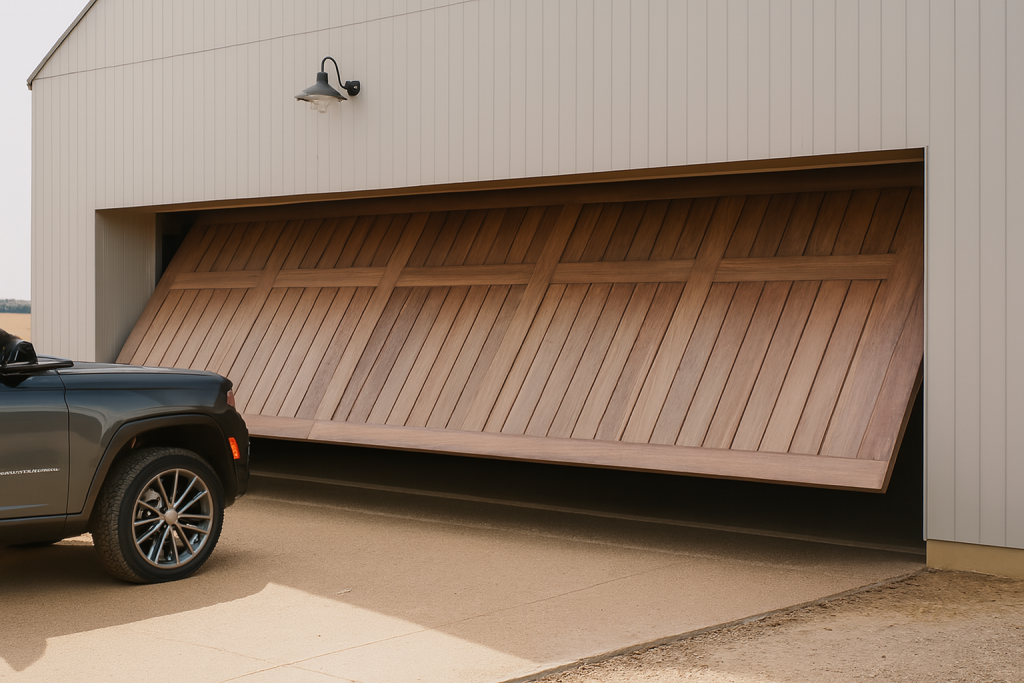
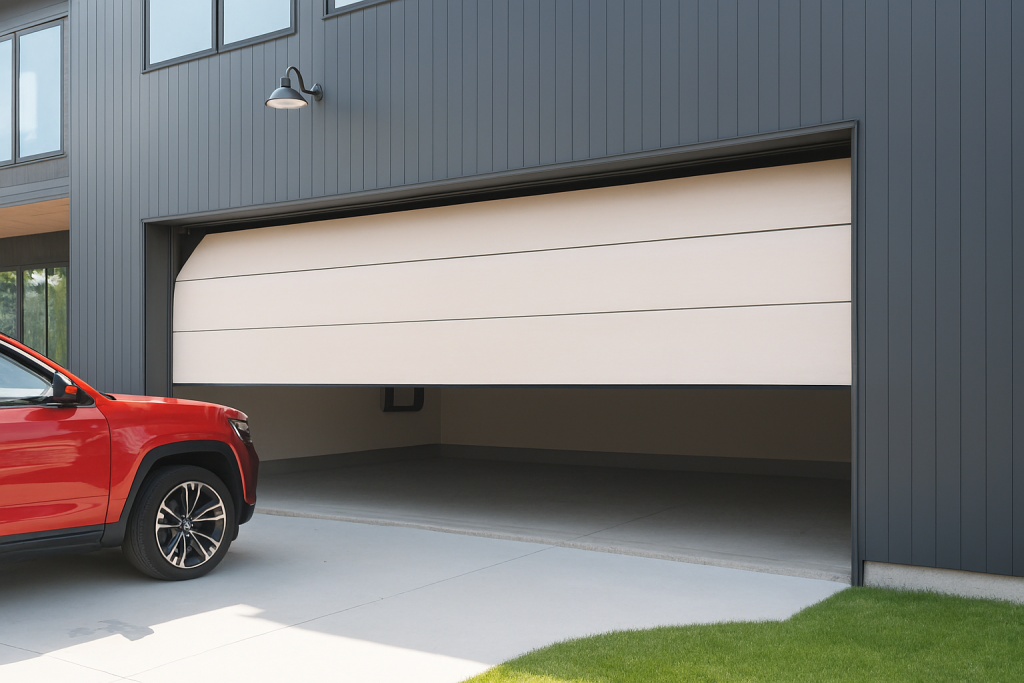
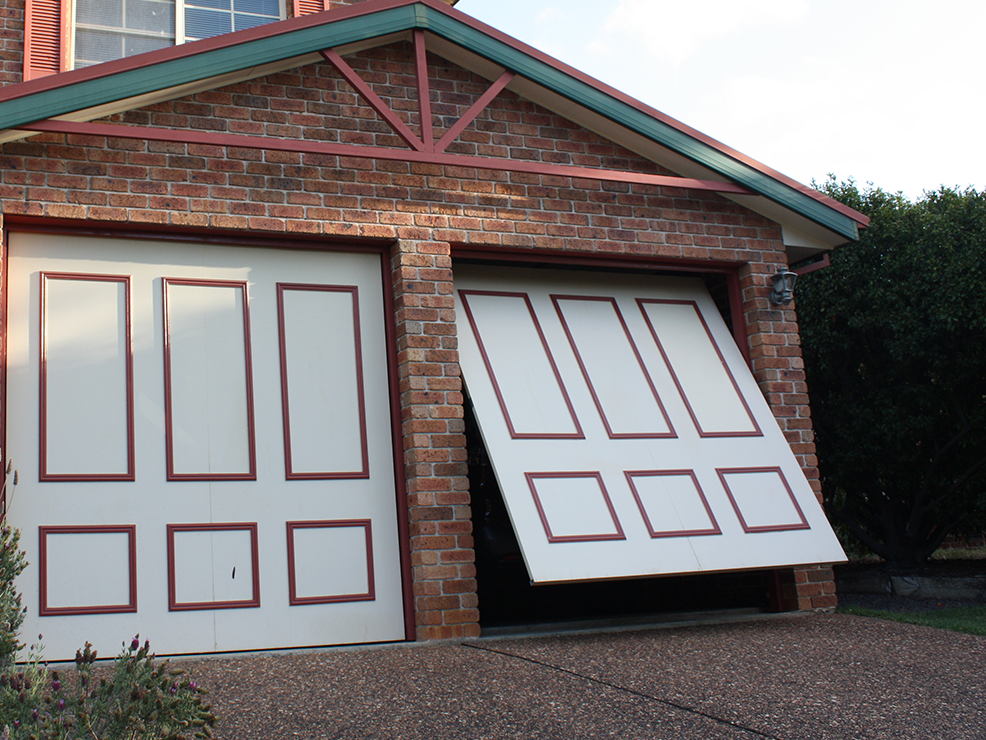
A vehicle hitting a garage door can leave anything from an obvious dent to a change in movement that is harder to see. The size of the mark does not establish the condition of the door, its guides or the supporting hardware. Stop and assess the situation from a safe distance. Do not immediately press the remote to check whether the door still works or try to push the damaged area back into shape.
Keep people away from the affected opening
Ask passengers and other household members to stay clear of the door and its movement path. If the door is bent, partly raised, displaced or resting against the vehicle, do not attempt to lift, support or move it. The vehicle and door may be interacting in a way that is not obvious. Explain that situation when seeking professional help rather than changing it to free the car.
If there is an immediate danger to a person, use the appropriate emergency assistance. For the door itself, keep controls out of casual use and tell everyone present that it should remain untouched. A person arriving later may otherwise press a remote out of habit. Clear communication is useful even when the impact initially appears to have affected only the face of the door.
Do not use normal operation as a damage test
A motor responding after an impact does not prove that the door is fit to travel. Repeated opening and closing can change the position of damaged components or create a new risk. Avoid testing from different remotes, changing force settings or disconnecting the opener to try manual movement. The assessment needs to consider the physical door and its support, not only whether a control still produces a response.
Leave springs, cables, brackets, tracks, guides and electrical equipment alone. Do not hammer out a dent, pull on a bent edge or loosen fixings to make a panel sit straighter. An adjustment made before inspection may hide the original condition and complicate the repair discussion. A cosmetic mark and a fault affecting movement need to be distinguished by inspection.
Record what happened while the details are clear
Write down the approximate time, the position of the door and the movement of the vehicle at contact. Note what happened afterwards without adding assumptions about internal damage. For example, a new gap or a door remaining partly open is an observation. A statement that the motor has failed is a conclusion that may not follow from what you can see.
Take an overall photograph and photographs of visible marks only where it is safe to do so. Do not step beneath a raised door, climb or reach behind a panel for a better view. Keep the original images so the sequence is clear. If a vehicle is still in contact with the door, describe that before anyone asks for it to be moved.
Explain access and security needs separately
Tell the repair team whether the garage contains a vehicle, whether the door is open or closed and whether the garage leads directly into the home. Mention another safe entrance if one is available. These facts help explain the urgency without asking the household to create a temporary mechanical solution. Use a different access route where possible while advice is arranged.
A door that cannot close may create a security concern, but do not try to resolve it with ropes, timber props or a lock the opener could work against. Ask for advice on the current condition and any appropriate temporary arrangement. Leave belongings that cannot be reached safely where they are and explain that limitation during the enquiry.
Arrange an assessment of the whole affected system
The visible panel damage is one part of the enquiry. Ask for the door, its supporting and guiding arrangement and any affected opener connection to be considered. Damage near the opening may also raise questions about the surrounding structure. The technician can explain which findings relate to the door work and whether another professional needs to assess a separate building issue.
Do not assume in advance that a panel can be repaired, that the whole door must be replaced or that the existing motor can be reused. Those decisions depend on the actual damage and suitable parts or replacement options. Ask the proposal to identify the work recommended and any uncertainty that remains. A clear scope is more useful than a promise based only on a driveway photograph.
Keep insurance decisions with the insurer
If insurance may be involved, contact the relevant insurer and explain the facts. Ask what evidence, assessment and authorisation it requires before repairs are arranged. Do not assume that the incident is covered by either a home or motor policy, or that obtaining a garage-door quote is the same as approval to proceed. Keep the claim conversation separate from the technical repair recommendation.
Retain written instructions about any temporary work and the final repair scope. If the household also wants an optional design or access upgrade, identify that request separately so the repair discussion remains understandable. Eastern Garage Doors can discuss the door assessment; coverage and payment decisions need confirmation with the insurer under the relevant policy.
Confirm the return to ordinary use
Once work has been assessed or completed, ask what operating advice applies and whether any restriction remains. Keep the work record with the door and opener information. Tell other regular users when the garage can be used under the agreed arrangement. If a new noise, uneven movement or closing problem appears, report it rather than assuming it is simply a harmless reminder of the impact.
For a garage door affected by vehicle contact, reach Eastern Garage Doors with the current position, visible damage and access details.