






Repairs & Maintenance
After a Storm: When to Arrange a Garage Door Assessment

Dec
Reviewed and updated: 14 October 2026
Stormy conditions can leave a garage door exposed to water, debris, wind, an impact or a power interruption. They do not automatically mean the door is damaged, and they do not make a particular repair necessary. The question is whether the door’s condition or operation changed. A careful post-storm assessment starts with what can safely be seen, followed by a professional inspection if there is damage, abnormal movement or uncertainty.
Wait until the area itself is safe
Do not inspect a garage door while there is lightning, flooding, fallen branches, damaged electrical equipment, loose building material or an unsafe driveway. Follow relevant emergency advice and keep people away from the opening until the surrounding area is safe. An open door, partly open door or door with a visible gap should be treated as an access and safety concern, not as an invitation to try a control.
Once conditions have settled, look from a clear, dry position. Avoid ladders, wet surfaces and contact with cables, tracks, electrical equipment or damaged cladding. If an emergency service, electrician, insurer or building professional needs access, explain the door’s position and condition rather than moving it for convenience. A garage opening can be dealt with after the more immediate site hazards are controlled.
Record what you can see without touching
Make a brief note of facts: the date the condition was noticed, whether a tree limb or object made contact, whether water entered the garage, and where the door stopped. Take broad photographs of the opening and visible damage from a safe distance. Include surrounding features such as a damaged panel, debris beside the opening or a changed gap, but do not reach into the mechanism for a close-up.
It is useful to separate observations from conclusions. “The lower panel is dented” and “the door stopped part way after the power returned” are observations. “The spring is broken” or “the motor was struck by lightning” are conclusions that need assessment. This distinction gives a repairer and, where relevant, an insurer a clearer account without turning a homeowner into a fault investigator.
Look for changes in the door’s normal behaviour
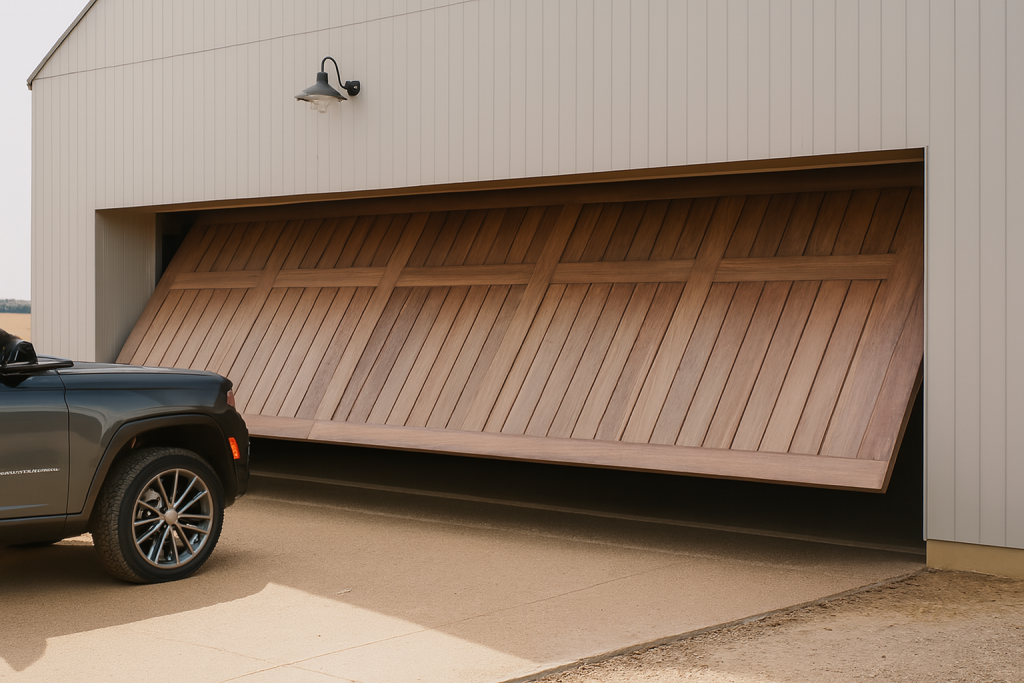
A door that is visibly bent, off its usual path, uneven, unusually noisy, slow, unpredictable or unable to close normally should be left out of use. Do not repeatedly open and close it to check whether the problem clears. Keep cars, people, pets and stored items away from the travel area, especially if the door is partly open or has changed position.
Do not manually lift, pull, brace or guide a changed door. Avoid manual releases, balance tests, lubrication, track straightening, tension adjustments and changes to opener settings. Storm conditions may reveal a pre-existing fault or coincide with a new one; either way, the door, supporting hardware and opener need to be considered together. Repeated operation can add damage while providing little useful information.
Treat power and control changes separately
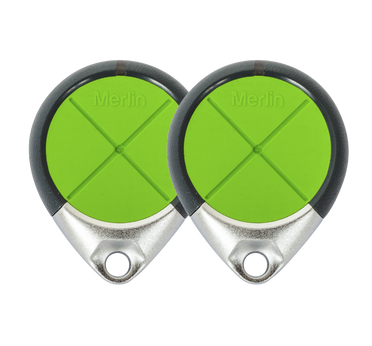
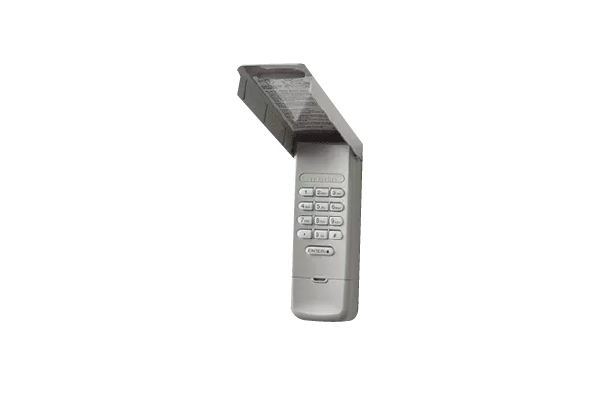
After an interruption, a Merlin remote or wall control may appear different because power has not been restored or because the door and opener now need assessment. Note what happens when an authorised control is used only if the door is stable, the path is clear and normal operation is safe. Do not remove covers, reset electronics or use an extension lead as a workaround.
Merlin’s homeowner support provides manuals and product-specific information. Use the exact model number, if it can be read safely, to find the applicable material. A general instruction for another opener, a similar remote or a different door type does not establish the correct response for your installation. If the door moves unexpectedly, stop and seek professional guidance rather than trying to restore service through programming changes.
Arrange assessment promptly when access or condition is affected
A professional assessment is appropriate when the door has visible damage, abnormal movement, unfamiliar sounds, a loose-looking component, water exposure around equipment or an unresolved control problem. Mention the present position, any known contact or water entry, whether the property can be secured and whether safe alternative access is available. This lets the service provider understand the urgency without guessing at a cause.
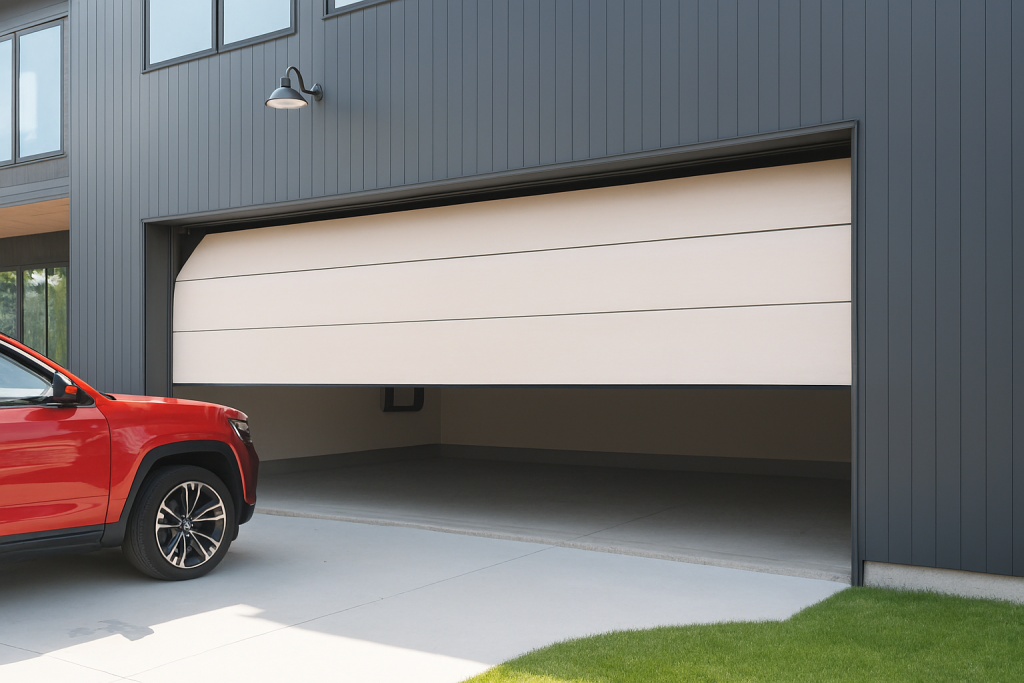
If the door is closed and stable, leave it closed where practical until advice is received. If it is open or partly open, establish a clear exclusion area and ask what temporary access or security arrangements are appropriate. Do not use the door as a barrier against wind, force it shut or ask someone to hold it in place. A temporary parking or storage change may be safer than an improvised repair.
Keep useful records after the assessment
Keep the technician’s findings, quotation, completed-work details and photographs with the property records. That history can distinguish a previous cosmetic mark from a later change and can help when future maintenance is discussed. If an insurer is involved, ask them what information they require and provide a factual record rather than modifying the door to create more evidence.
Future preparation is simple: keep the opening clear, know the door and Merlin opener model if fitted, and retain the relevant manuals. This is not a promise that weather will have no effect. It is a practical way to make post-storm decisions from the actual condition of the site rather than broad assumptions about what a storm must have done.
Sources and support
For an assessment of a changed door, see Eastern Garage Doors servicing and repairs or contact Eastern Garage Doors. Merlin’s homeowner support page provides current model-specific manuals and support.