






Safety & Security
Garage Door Torsion Springs: Why a Technician Must Assess Them

Oct
Reviewed and updated: 14 October 2026
The term torsion spring describes one type of spring arrangement found on some garage doors. Not every door uses the same layout, and a homeowner should not need to identify or handle the arrangement to make a safe decision. An operating change is enough reason to stop and seek assessment.
A torsion spring is not a homeowner repair
Torsion springs are one type of counterbalance component used on some garage doors. Their layout and relationship to the door can vary, so an article cannot tell a homeowner what is fitted at a particular property. The important safety point is much simpler: a suspected spring concern needs professional assessment, not adjustment or inspection by the household.
Recognise the operating change, not a part diagnosis
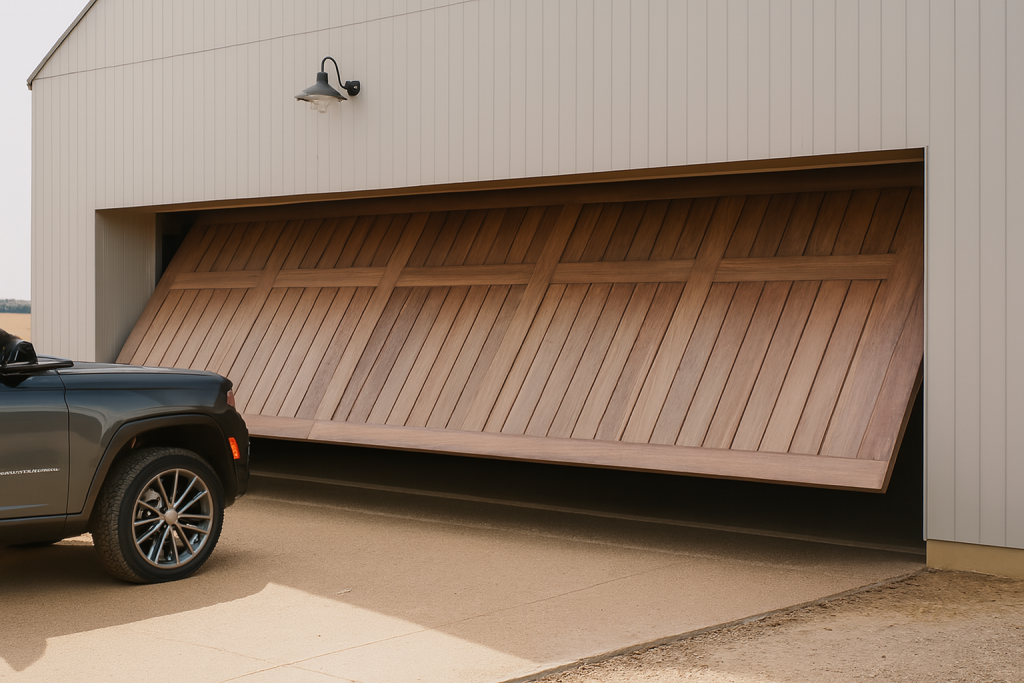
A homeowner may first notice a change in how the door operates. It might stop moving normally, become unusually heavy, sit unevenly, make a sudden unfamiliar sound or fail to respond in the way it previously did. A visible gap or changed-looking component may also be noticed from a safe distance. These are symptoms to report, not evidence that a specific spring has failed.
Keep distance from the spring arrangement
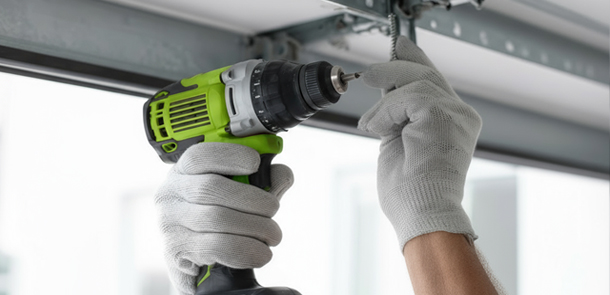
Do not approach a torsion spring, shaft, winding hardware, cable, bracket or attachment to look for damage. Do not touch, turn, stretch, secure, lubricate or replace any part. The fact that a door is stationary or an opener is switched off does not make loaded counterbalance components safe to handle.
Do not use repeated operation as a test
Avoid common “one more try” responses. Do not press the remote repeatedly, disengage the opener, manually lift the door to assess resistance or ask another person to steady it. Those actions can alter the condition or put someone in the doorway when the door’s support and movement are uncertain.
Protect the opening while it is out of use
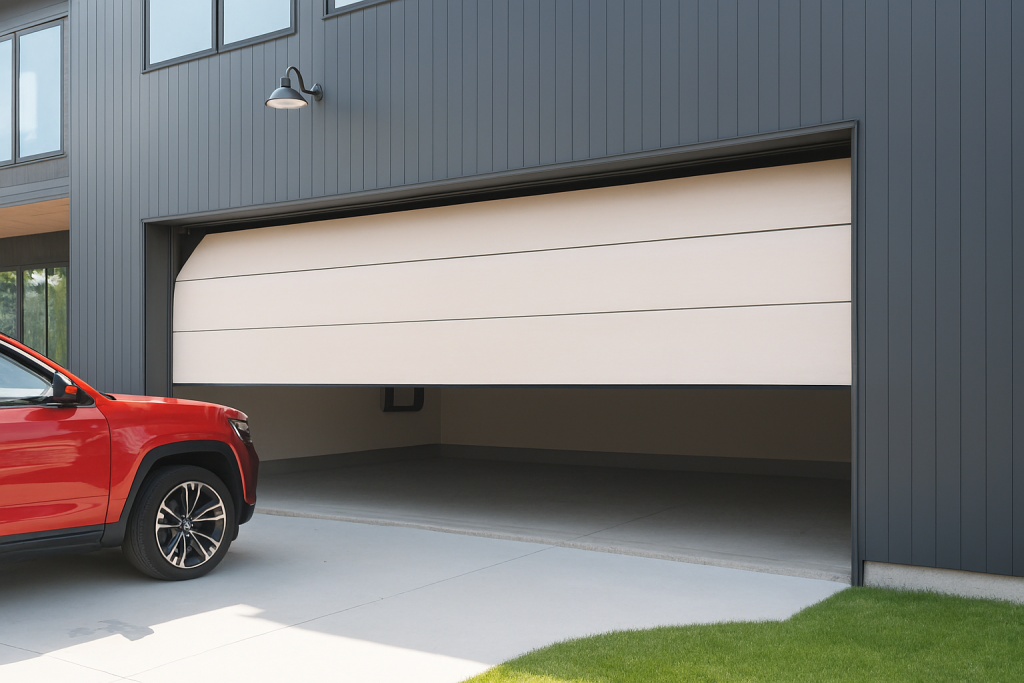
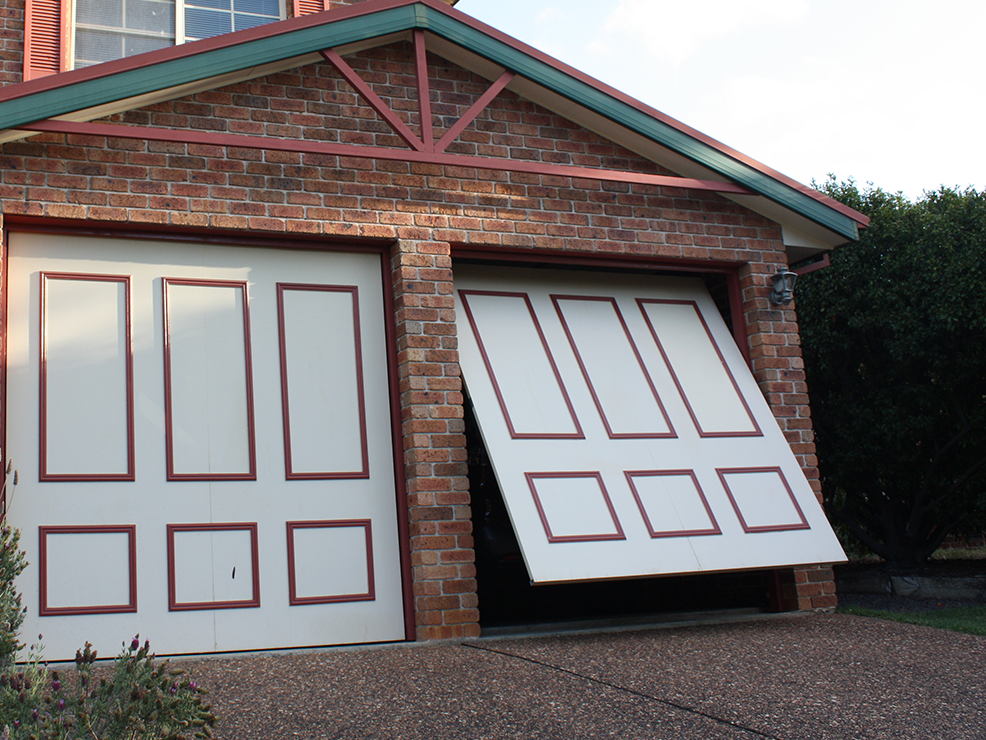
If the door is closed and stable, it can often remain closed while advice is sought. If it is open, partly open or visibly unstable, keep people and vehicles out of the opening and make sure household members know not to use it. Do not prop it, tie it in position or leave someone standing beneath it while you make a call.
Use a different access route
Plan ordinary access around the affected door. Use a different entrance where possible, avoid parking in a position that depends on the garage operating, and move only items that can be reached without entering the door’s path. This practical restraint is more useful than attempting to recover the normal routine immediately.
Give the technician observable facts
For a service enquiry, describe the door type if known, its current position, what changed, whether there was a bang or impact, and whether an opener was involved. State any visible damage without attempting to obtain close images of the spring assembly. A technician needs the overall door condition and site context, not a homeowner’s diagnosis.
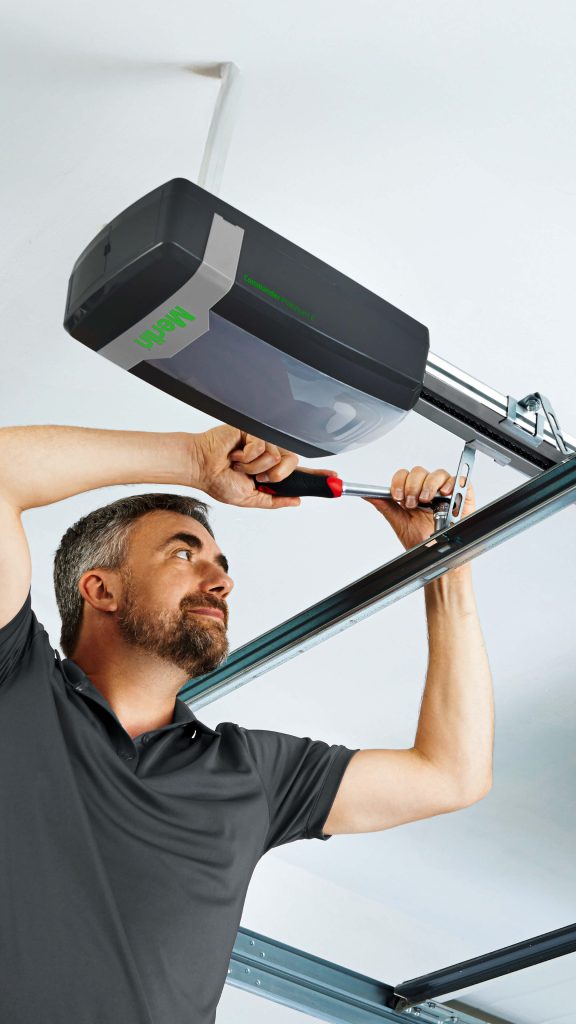
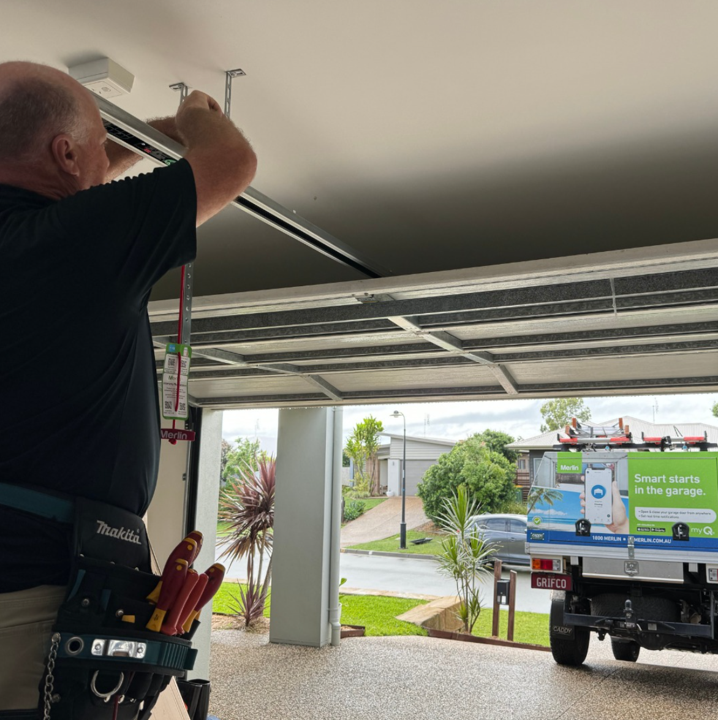
If a Merlin opener is installed, the exact model manual can identify its controls and formal support route. It should not be used as a reason to reset or release a door whose counterbalance system may be affected. Opener operation and the door’s supporting arrangement must both be considered in an assessment.
Eastern Garage Doors notes that garage-door springs and cables operate under high tension and can be dangerous to repair without appropriate tools, training and experience. It also lists heavy operation, loud noise and uneven or off-track movement among signs that should lead customers to stop operating the door and get in touch.
A technician visit can establish what type of system is present and what work, if any, is appropriate. Do not assume that an online image, a neighbour’s door or an old invoice confirms the same arrangement. Conditions can differ even where doors appear similar from the driveway.
Keep a record of the assessed door
After professional assessment, retain the operating advice and service information for the installed door. The record should help the household respond to future changes without relying on memory of a stressful event. It should not become a home repair guide for springs or counterbalance hardware.
The safest outcome begins with preserving the condition as found. By keeping clear, stopping use and explaining the observable facts, the household avoids adding a new hazard while still giving the service provider a clear starting point.
A recent property purchase, renovation or change in vehicle use can be relevant background for a service enquiry. It may explain why the household does not know the door’s history, but it does not make a spring system safer to investigate. State that background plainly so the assessment begins with the right expectations and access arrangements.
Where the door gives direct access to the home, consider the practical security plan while it remains out of use. Use another established entrance and avoid leaving family members to stand at the garage or attempt a workaround. A service provider can understand the urgency from the facts without the household changing the door’s condition to prove the point. Keep visitors informed of the temporary access plan so they do not arrive expecting the garage door to operate normally.
Sources and support
Eastern Garage Doors Garage Door Servicing and Repairs and Eastern Garage Doors Contact Us and Merlin Australian Homeowner Support.
For a garage-door fault or servicing enquiry, contact Eastern Garage Doors with the visible symptoms and the door’s current position.