







Repairs & Maintenance
What Garage Door Noises Can Mean and When to Stop Using the Door

Dec
Reviewed and updated: 14 October 2026
A garage door develops a familiar sound through ordinary use. When that sound changes, the useful question is what else changed with it. A rattle, scrape, squeak or bang can be worth reporting, but none is a reliable diagnosis on its own. The timing of the noise, the door’s movement and any visible damage give a technician more useful information than a guessed name for a failed part.
Describe the sound without trying to locate it by touch
Use ordinary words: a short knock at the start, scraping near the bottom, a grinding sound during closing or a sudden bang followed by changed movement. Note whether the sound happened once or has become part of normal operation. You do not need technical vocabulary to make a useful report. Avoid putting your hand near a guide, hinge, cable or motor to feel where a vibration begins.
Sound can be difficult to place inside a garage. Hard surfaces, stored objects and the position of the listener can affect what seems loudest. A recording may help if it already exists or can be made safely during otherwise normal use. Do not repeatedly operate a suspect door for a better recording, stand beneath it or ask another person to watch the mechanism from close range.
Scraping or grinding needs context
A scraping sound accompanied by uneven travel, hesitation or visible contact is a reason to stop using the door and seek an assessment. Tell the technician which direction the door was moving and roughly where the change occurred. Do not assume that the sound means a guide needs bending, a roller needs replacing or a track needs lubrication. Those conclusions require inspection of the installed system.
Keep nearby objects in the description too. If a storage item, bicycle or loose object is plainly in the approach, mention it. Only move ordinary loose items when the door is stationary and stable and they can be reached without entering its path. Leave anything caught against or within the mechanism alone. Clearing a visible obstruction does not establish that the door remains undamaged or suitable for further use.
A bang or sudden change deserves a stop-use response
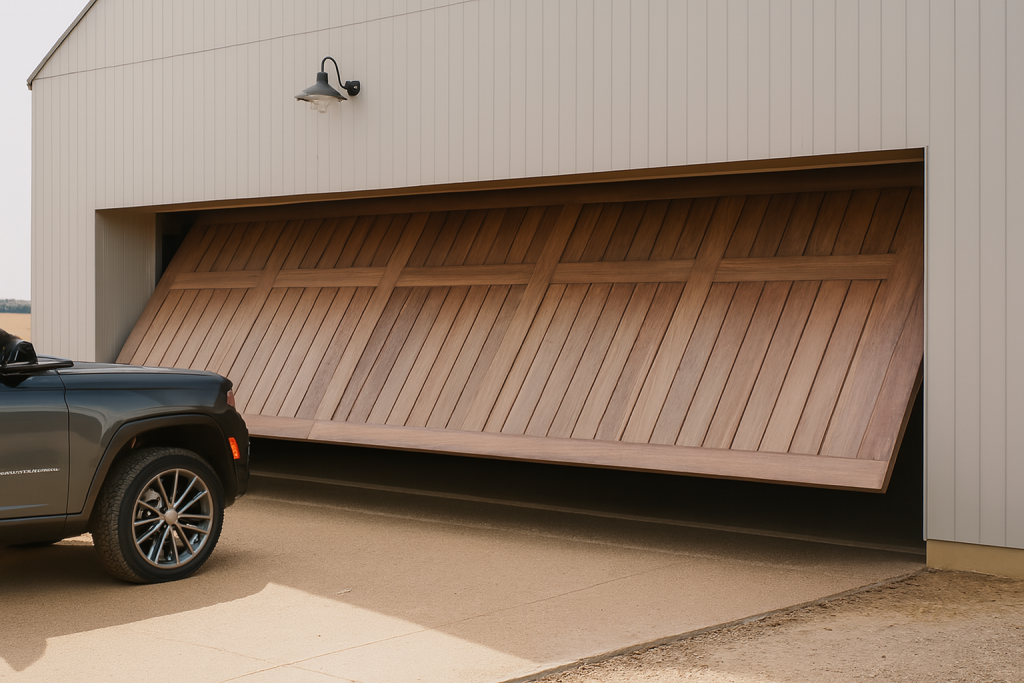
If a loud bang is followed by a door that will not move normally, looks uneven or feels unexpectedly heavy during ordinary use, do not try to prove which part failed. Stop operation, keep people clear and describe the sequence. A noise can coincide with damage to a loaded component, but an article cannot identify the cause from the sound alone.
Avoid pulling the manual release, lifting the door to test resistance or asking someone to hold it while a remote is pressed. A stationary door or disconnected motor does not make springs, cables and supporting hardware safe to handle. If the door is partly open, do not prop or tie it in place. Explain its current position when arranging help so the access concern is understood.
A squeak is not an instruction to spray everything
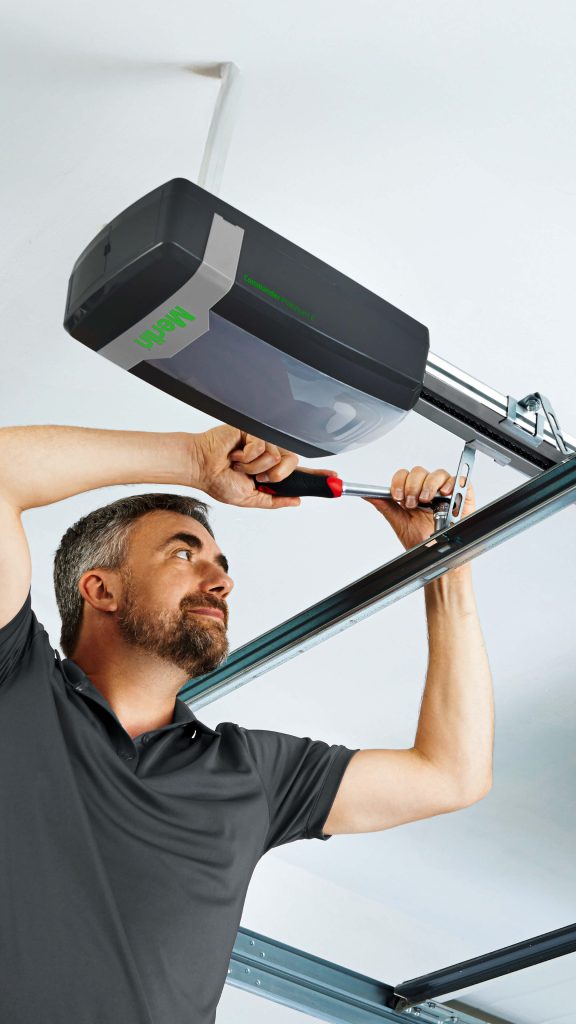
A light squeak during otherwise normal movement may prompt a care question, but the answer still belongs to the particular door and component. Find the door’s care information and the opener manual separately. A Merlin motor manual does not necessarily describe the finish, guides, hinges or seals on the door connected to it. Ask for the appropriate instructions if those records are missing.
Do not select a spray because its label mentions garages or because it is already on the shelf. Cleaning products and lubricants serve different purposes, and the permitted material, location and application need confirmation. If movement has changed as well as the sound, arrange assessment before treating it as routine maintenance. Spraying a noise may obscure a symptom without addressing the condition behind it.
Separate an opener sound from a door fault
Note whether a control produces a response and what happens next, using only what you have already observed. An audible motor with no normal door movement is useful information for a service enquiry; it does not establish that the motor, remote or a particular door component is responsible. Keep the model details if they are already available without climbing or removing covers.
Do not change force or travel settings to quieten the system or make it pass a difficult point. Avoid a guessed reset sequence, repeated power cycling or pairing a different remote as a noise test. Current Merlin homeowner support can help identify the proper manual and support route, while a technician assesses the actual door and installation.
Report the circumstances around the first noise
Tell the service team if the change followed vehicle contact, a storm, an outage, renovation work or a reorganisation of storage. These events are background information, not proof of a cause. Include whether the problem occurs during opening, closing or both, and whether the door is now shut, raised or unable to complete its movement. Mention any need to access a vehicle inside.
If someone has already applied a product or changed a setting, explain exactly what was done. Keep the product label or written instruction used rather than trying another adjustment to reverse it. Accurate information helps distinguish the original symptom from later changes. There is no benefit in hiding an attempted fix from the person assessing the door.
Keep the response proportionate and consistent
A new sound is worth noticing; a sound combined with damage, erratic movement or loss of normal operation needs the door left out of use. Tell the household which situation applies and use another entrance if needed. Retain the advice given after assessment so future changes can be compared with the known condition of the door.
For a changed garage-door noise or movement, contact Eastern Garage Doors with the observations above. Leave the diagnosis and adjustments to the assessment.