








Safety & Security
The Garage and Driveway Safety Conversation Every Family Should Have

Jul
Reviewed and updated: 14 October 2026
A family can know that garage doors are heavy and still have an unclear routine at the opening. One person presses the remote while another unloads shopping. A child goes back for a school bag. Someone assumes the dog is inside. A useful garage and driveway safety conversation deals with those ordinary moments: who controls the door, where everyone waits and what happens when the routine changes. It should be practical enough for every adult who uses the property to follow.
Start with an ordinary arrival home
Talk through an arrival without moving the door or vehicle for demonstration. Where do passengers normally get out? Who carries the shopping? Does someone open an internal door before everyone has left the garage? Notice where two activities compete for attention. The point is to organise the sequence, not to blame a household member for an old mistake.
Choose a place for passengers to wait that is clear of both vehicle movement and the garage-door path. The driver should know where the passengers are before the vehicle moves. Another adult, when available, can supervise children while the driver concentrates on parking. Avoid a routine that depends on a child remembering to move away at exactly the right moment. Adults remain responsible for checking that the area is clear.
Agree who operates the door
At any given moment, one person should be responsible for the door control. Two people pressing separate remotes can create confusion about what the door will do next. Decide how the person operating it will check the opening and communicate before moving it. They should be able to see the travel area and wait until normal movement is complete.
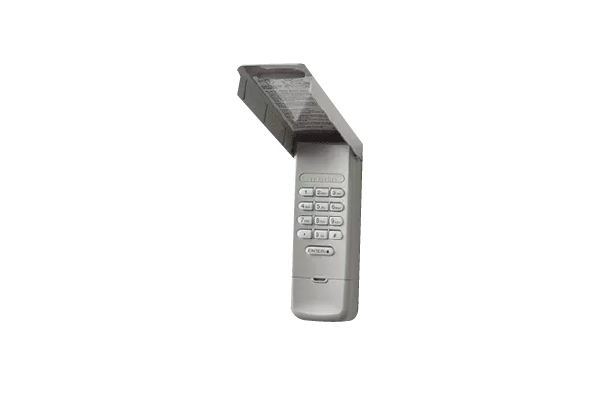
Explain that a remote is an access device, not a toy or an invitation to race the closing door. Keep it where authorised adults can manage it, and avoid leaving it on a low bench or in a vehicle where children can reach it. If a visitor needs to use the garage, explain the ordinary routine before lending a control. Familiarity with another house does not mean they know this opening.
Plan for children, pets and visitors separately
Ask how each person usually enters and leaves. A teenager carrying a bicycle, a younger child holding a scooter and a grandparent unloading bags have different distractions. Choose a clear pedestrian route and keep it free of storage. Everyone should wait for the door to stop before passing through; holding an object under it is not a way to keep it open.
Pets need an adult plan too. Settle them in a safe area before operating the door or manoeuvring a vehicle. Do not rely on a safety beam to detect every animal or on a pet responding to a call while the door is moving. When visitors arrive, assign the supervision task clearly instead of assuming that somebody else is watching the children and pets.
Decide what happens when the usual routine fails
Discuss a lost remote, a power interruption and a door that will not close. Identify another entrance and a suitable place to park if the garage cannot be used. Keep the relevant opener manual accessible, but do not turn the family conversation into a manual-release lesson copied from a generic video. The correct procedure depends on the equipment and its condition.
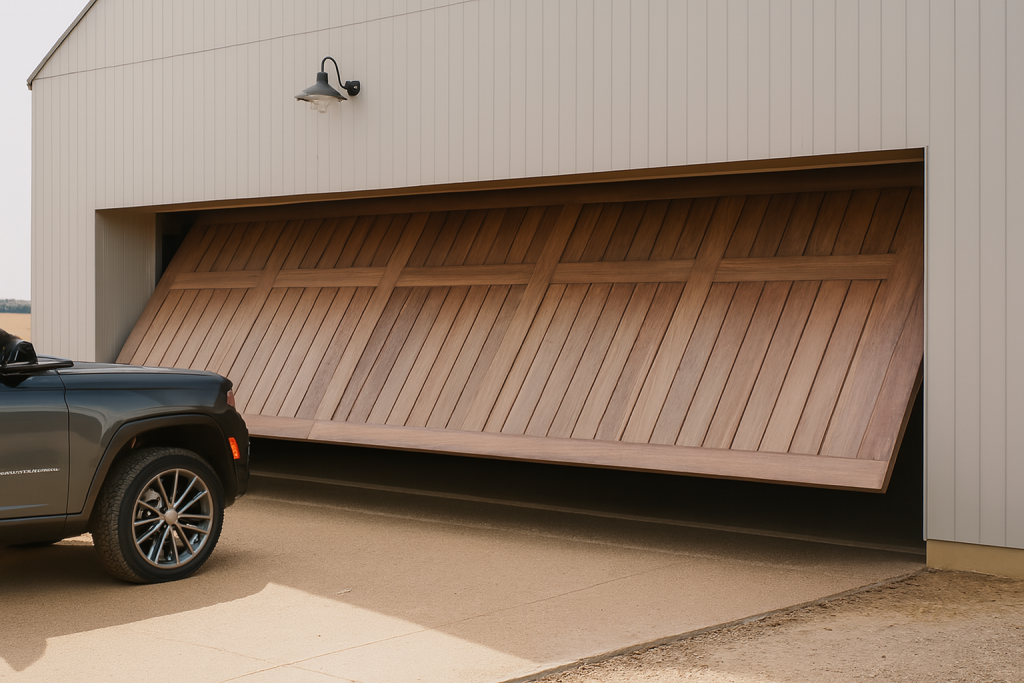
If the door is damaged, crooked, moving unevenly or responding unpredictably, the plan should be to stop use, keep people clear and seek professional advice. Nobody should lift, force or adjust it to avoid being late. Tell children that a ball, bicycle or bag near a faulty door can wait. Retrieving an item is never more urgent than keeping people out of the movement area.
Make storage part of the conversation
Look at where daily items end up: shoes beside the internal entrance, bikes near the tracks, a rubbish bin pushed against the door or boxes waiting to leave the house. Agree on storage places that leave the threshold, pedestrian route and door mechanism clear. A rule about keeping clear is easier to follow when belongings have a realistic alternative home.
Plan for unusual days as well. A party, a delivery, school holidays or a garage clean-out can temporarily change how the space works. Decide who will check the opening before the next use. Do not lean furniture or equipment against the door, and do not block a safety device to make room for storage. The garage needs to remain an operating doorway even when it is being used for another purpose.
Keep the agreement short enough to use
Write down the few rules the household has actually agreed: where people wait, who controls the door, where remotes are kept and what to do if operation changes. Share them with regular carers and visiting relatives. Use the same words consistently so a child does not hear one rule from a parent and a different one from another adult.
Revisit the arrangement after a move, a new vehicle, a new pet or a change in mobility. If the layout makes safe access difficult, describe that problem to a professional rather than expecting better reminders to solve it. Merlin’s safety accessory guidance explains equipment options for compatible installations, but hardware works alongside supervision and a clear routine. Eastern Garage Doors can assess the door and discuss access concerns that need more than a household agreement.
To discuss your garage door, contact Eastern Garage Doors with the door type and the question you would like assessed.