






Repairs & Maintenance
A Practical Garage Care Checklist for Homeowners

Aug
Reviewed and updated: 14 October 2026
Garage care is most useful when it is a short routine built around what you can safely observe. The aim is not to turn a homeowner into a garage-door technician or to apply a universal maintenance schedule. It is to keep the space usable, recognise a change in operation early and give a professional accurate information when an assessment is needed.
Keep the door’s operating area clear
Start with the space where the door moves. Store boxes, bicycles, sporting gear, bins and garden tools away from the opening, tracks, side areas and any visible safety equipment. A clear zone helps the door operate as intended and makes it easier to notice a new mark, obstruction or change in movement. It also reduces the chance that a hurried vehicle or visitor will push an item into the door’s path.
Review this space whenever storage changes. New shelving, a roof rack, tall vehicle or ceiling-hung item can alter the room available around the door. Do not install, relocate or fasten anything close to the operating equipment until the proposed location has been considered with the actual door and opener. A garage can look tidy while still leaving too little space for safe operation.
Observe normal operation from a safe position
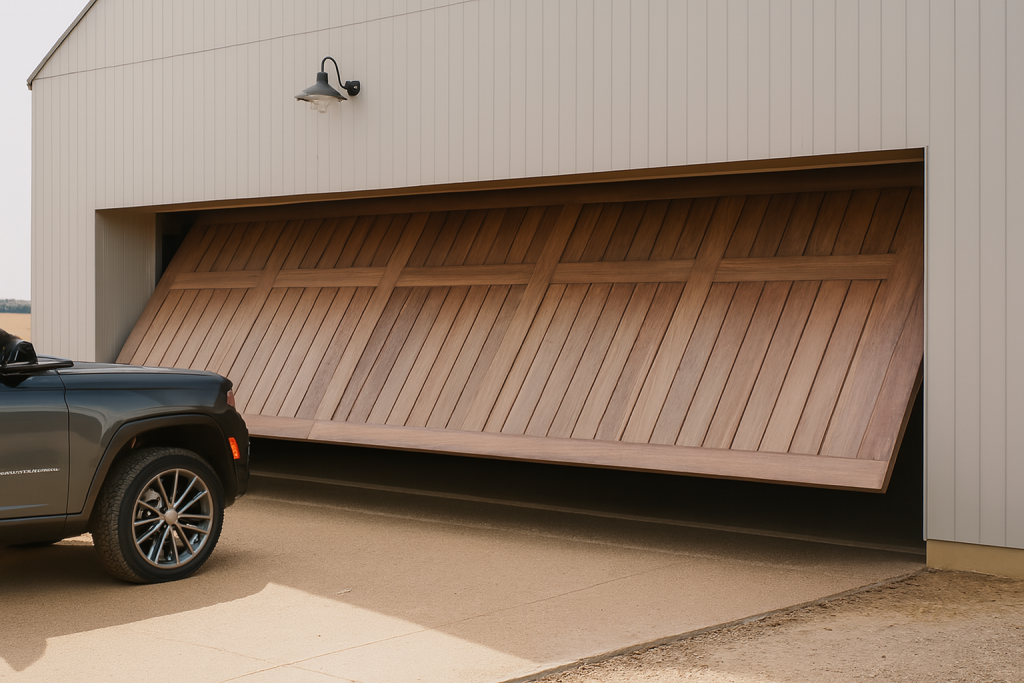
When the door is used in the ordinary course of the day, notice whether it completes the same movement as usual. New scraping, grinding, delay, uneven travel, unexpected reversal or a door that stops in an unusual position are useful observations to record. Visible damage, bent sections, a loose-looking component or water entering around the opening also deserves attention.
Do not repeatedly cycle a door to decide whether a symptom is real. One changed operation is enough to start an enquiry. Leave people, pets and belongings clear, stop using the door if it is not operating normally, and describe what happened. Do not pull, lift, force or brace the door in an effort to restore operation.
Look after the garage environment
The space around a garage door affects both access and the condition of what you can see. Keep the doorway clear of pooled water, soil, leaves and wind-blown debris. Check that temporary items have not blocked a drainage point or been placed against the bottom edge of the door. If you notice persistent moisture, corrosion, staining or a new gap, take a photograph and include it in a service enquiry.
It is also worth noting changes outside the garage: paving works, a new garden bed, altered drainage, a vehicle impact or building work near the opening. These details can help distinguish a long-standing finish mark from a recent change that affects operation. They are context for an assessment, not a diagnosis to act on without advice.
Keep controls and access information organised
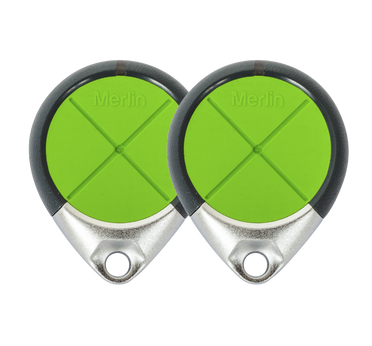
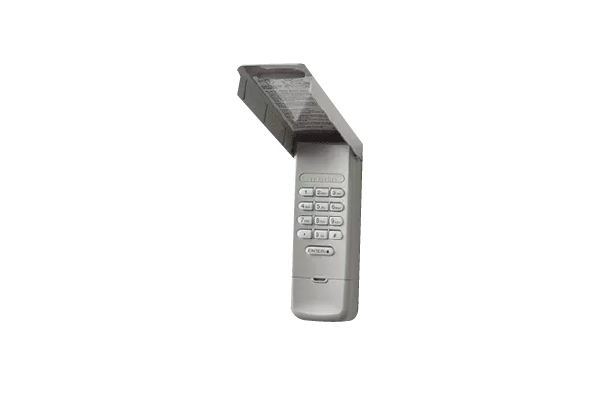
Store remotes, keys and any relevant manuals in known locations. Keep a list of who holds each remote or access device, especially after a move, tenancy change or household reorganisation. If a remote is lost, identify the opener model before seeking advice. Model information and clear photos of the control equipment are more reliable than trying unfamiliar programming steps found online.
Where a compatible connected feature is installed, use the current manufacturer guidance for its accounts and permissions. Review access when a phone changes hands or a temporary user no longer needs entry. Connected access is a convenience layer for the installed equipment; it should not replace the ordinary habit of checking the doorway and keeping controls under the owner’s management.
Know which work is not a homeowner task
Garage doors and openers have components that can be hazardous when adjusted incorrectly. Do not work on springs, cables, drums, brackets, hinges under load, force settings, electrical connections or the operator mechanism. Avoid instructions that suggest testing the door’s balance or making mechanical adjustments yourself. These tasks call for a qualified professional who can assess the whole arrangement.
Similarly, do not bypass a safety device, alter travel settings or continue using a door that appears damaged just to keep a vehicle inside or outside. Arrange an assessment and explain the immediate access issue. A professional can advise on the appropriate safe next step for the installed door rather than leaving the household to improvise.
Maintain a simple service record
A short record makes future conversations clearer. Note the date of a service, the symptom reported, the work completed and any model or part information supplied. Add photos of a visible impact or unusual condition before it changes. Keep invoices and product documents with the property records rather than relying on memory when a different household member calls later.
Follow the inspection and servicing schedule in the documentation for the installed door and opener, including any warranty requirements. The right timing depends on the equipment, its use and the applicable product guidance. Ask the technician what owner care is appropriate for your particular arrangement and when the next review should be considered. This turns a generic checklist into a plan that reflects the garage you actually use.
Use the checklist after changes, not only after faults
Review the garage when a new car arrives, storage is reorganised, renovations occur or access users change. These moments are often when clearances, controls and routines quietly shift. A brief check can identify a practical issue before it becomes a rushed problem at the driveway.
If you have observed a change in the door or opener, contact Eastern Garage Doors with the model information, photos and a clear description of the current operation.