






Safety & Security
Garage and Driveway Safety: Everyday Habits That Matter
Reviewed and updated: 14 October 2026
The garage and driveway often sit at the busiest edge of a home. People arrive with shopping, children move between the house and a car, visitors look for a place to park and bins or sports gear can accumulate near the door. Because those routines feel familiar, it is easy to move through them on autopilot. A safer approach is to make a few deliberate checks part of every arrival and departure.
This is not about assuming that equipment or a household rule can remove every risk. It is about giving people, vehicles and a moving garage door enough space, attention and predictable routines. The details will differ from home to home, especially where several drivers, young children, pets or shared access are involved.
Make the driveway a pause point
Before a vehicle moves, pause long enough to look around the driveway, footpath and garage entrance. Check mirrors and the area behind the vehicle, then look again after starting it. Children and pets can change position quickly, and a parked car, hedge or wall can limit what a driver sees. A short, repeatable check is more useful than relying on a hurried glance.
Agree on a simple household rule: nobody walks through the vehicle’s path while it is reversing or manoeuvring. If a child needs help with a seatbelt, bags or a scooter, complete that task before moving the car. Visitors and tradespeople may not know the family routine, so it is sensible to slow down when another vehicle or person arrives.
Keep the operating area clear
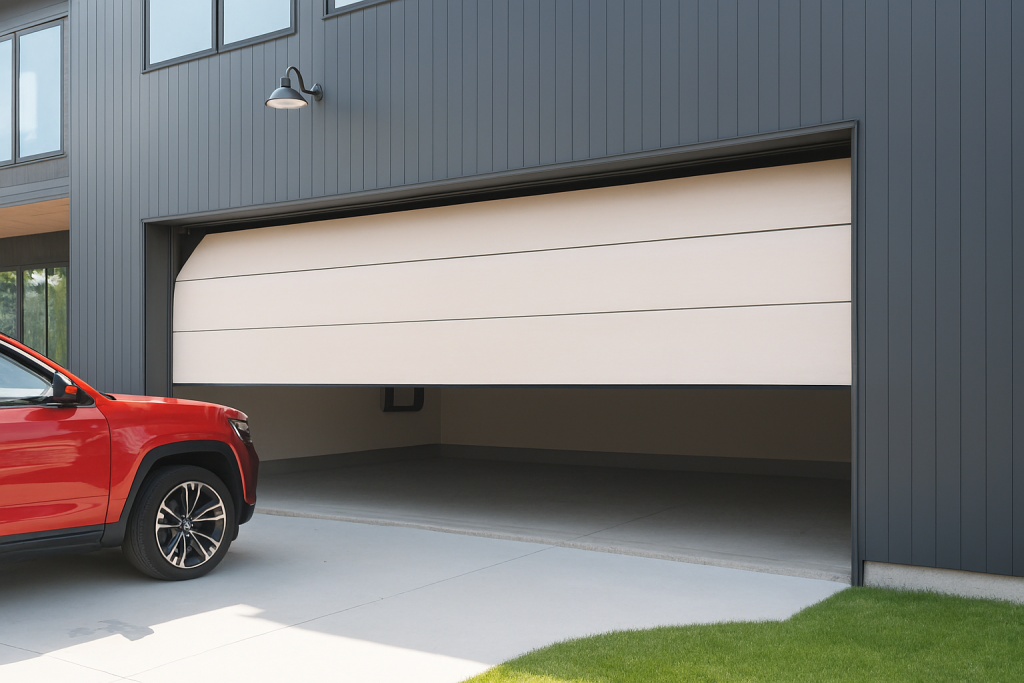
A garage door needs a clear path to move. Keep bicycles, boxes, garden tools and rubbish bins away from the opening and from the areas where the door travels. Storage can grow gradually, particularly around school holidays or renovations, so include the garage opening in an occasional tidy-up. A clear floor also makes it easier to notice a new mark, loose item or water entry near the door.
Do not let children play beneath, hang from or race through a door while it is operating. The same principle applies to adults retrieving an item at the last moment. If something has been left on the wrong side, keep people clear and use the normal controls according to the supplied instructions. Retrieve the item only when the doorway is safely accessible; do not reach beneath a partly open or faulty door. Never try to outrun or catch a moving door.
Use controls deliberately
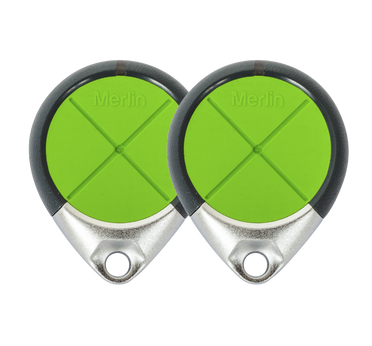
Keep remotes where they are not easily handled by children or casually passed between people. Treat a remote as an access device: know who has one and update the household record when a car is sold, a tenant moves out or a remote is lost. Avoid leaving a remote visible in an unattended vehicle. Consider how the remote will be kept secure when a vehicle is serviced, sold or used by someone else.
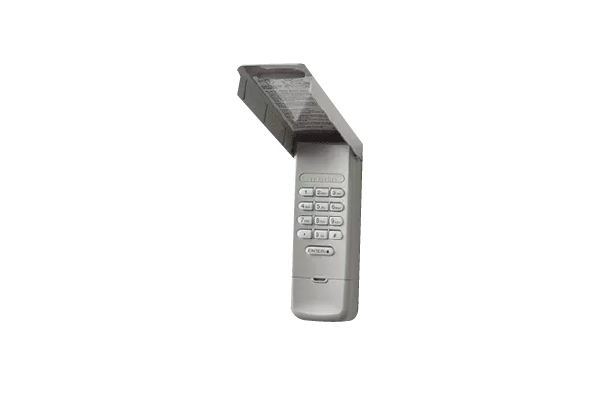
Wall controls and phone-based features, where fitted and supported by the relevant Merlin product, should be managed with the same care. Use individual access arrangements where the system allows it, rather than sharing passwords or handing over an owner account. Do not give codes, app passwords or verification codes to an unknown caller who says they can fix an access problem.
Watch the door, not only the car
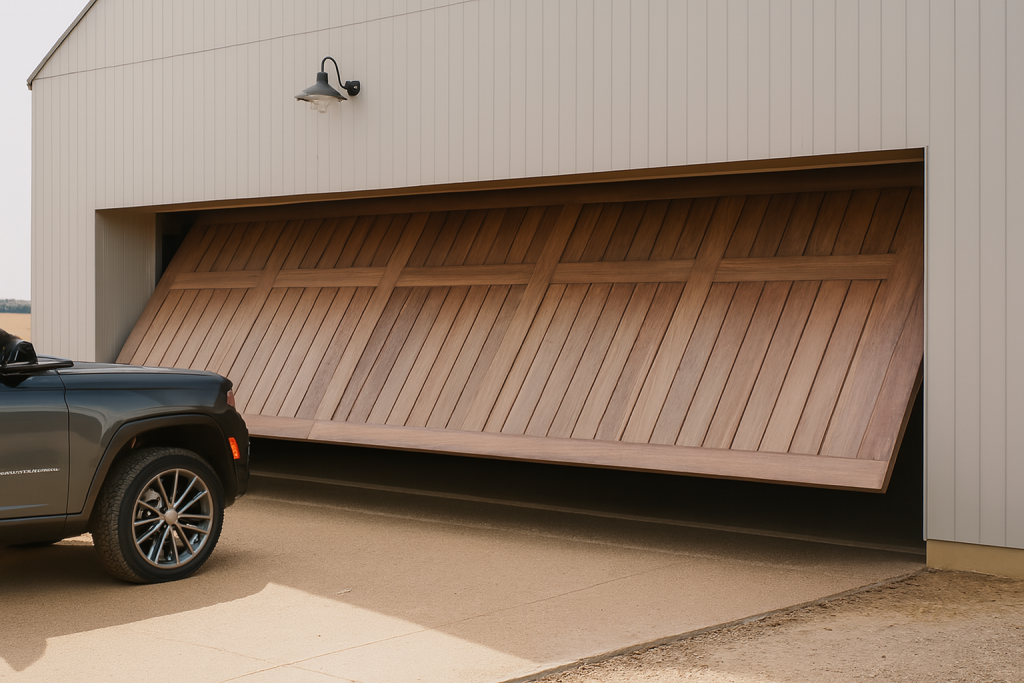
When using the remote, stay in a position where you can observe the door until it has finished moving. Do not press the control and walk away assuming the opening has cleared or the door has closed. If you see uneven movement, a new noise, a gap, visible damage or a door that stops unexpectedly, stop using it and arrange an assessment. Repeatedly cycling a faulty door can make the situation harder to assess.
Notice changes around the opening as well. A new dent after vehicle contact, loose material beside the tracks, an obstruction near the doorway or a water leak may affect how the space is used. Photograph visible changes from a safe distance if that will help explain them. Do not touch springs, cables, brackets, tracks or opener settings to investigate the problem yourself.
Plan for ordinary family moments
Practical safety habits work best when they fit normal life. Nominate a place for scooters, balls and bins that is outside the door’s path. Ask children to wait with an adult rather than standing at the garage threshold when a car is arriving. If the garage is used as a workshop, keep a clear route from the internal door to the house and put away cords before the door is operated.
Think about who may use the driveway when the usual driver is not there. A teenager learning to drive, a grandparent, a cleaner or a visiting friend may need a clear explanation of where people wait, how the door is controlled and what to do if it does not move normally. Written household notes can be helpful for shared homes, provided they do not expose access codes or account details.
Choose technology after the routine
Some garage-door systems have safety and access features, but their availability depends on the exact door, opener and installation. Ask for the model information and current documentation before assuming a feature is fitted or compatible. Technology can support a careful routine; it does not replace a driver’s observation of people and obstacles around a vehicle or moving door.
If you are considering an accessory, describe the existing door, opener and how the household uses the garage. That gives a supplier a better starting point than a request for a generic safety upgrade. Keep operating instructions available for the people who use the system, and revisit the routine after a renovation, a new car, a new pet or a change in who has access.
Know when to seek help
Keep people and vehicles clear if the door is partly open, damaged, moving unevenly or not responding normally. Do not work beneath a stopped door or attempt a manual-release, balance or tension test without the applicable professional guidance. Explain the door’s position, the last normal operation and any visible damage when arranging assistance.
Eastern Garage Doors can discuss observed faults and safe next steps for the garage-door system at your property. Contact the team with the door type, any opener details and a clear description of what has changed.