






Safety & Security
Why Broken Garage Door Springs Need Professional Attention

Dec
Reviewed and updated: 14 October 2026
Springs are part of the counterbalance arrangement on many garage doors. Their design and location vary, and they are not a homeowner repair task. When a spring fault is suspected, the useful response is deliberately limited: stop using the door, keep people clear, avoid controls and arrange a professional assessment of the installed system.
The first signs may be operating changes
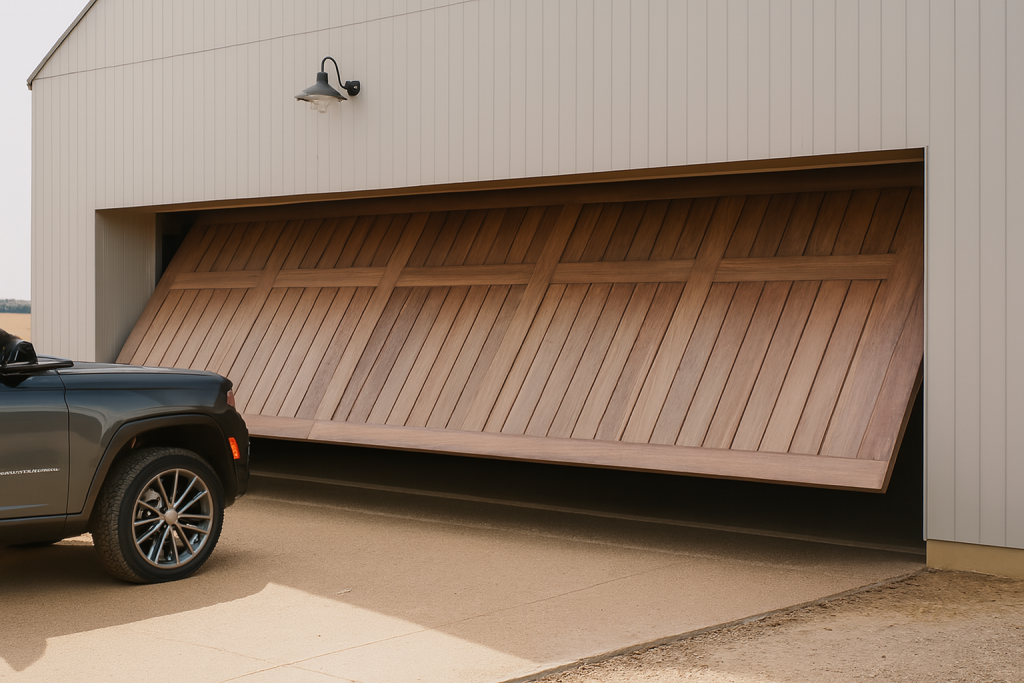
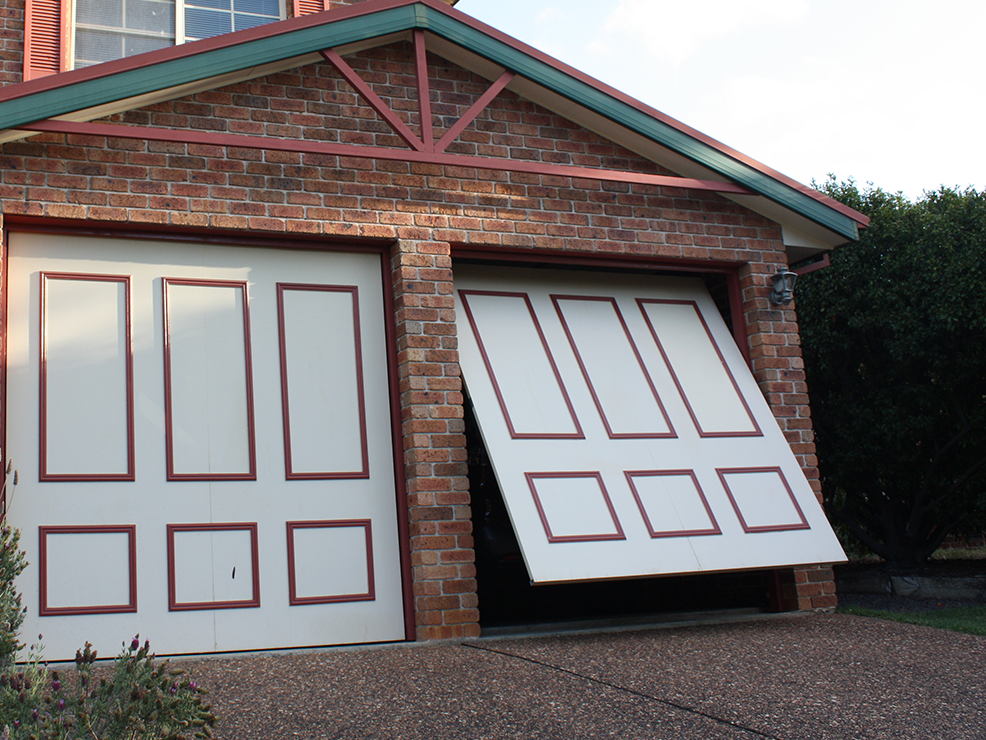
A homeowner may notice an operating change before they know anything about the cause. The door may become unusually heavy, fail to move as expected, sit unevenly, make a sudden unfamiliar noise, or have a visible component that no longer looks as it did. Those observations are enough to change the decision from ordinary use to stop use. They are not a prompt to get closer for a better look.
Keep your distance from loaded components
Do not touch a spring, cable, bracket, shaft or attachment to find out whether it is damaged. Do not try to turn, stretch, secure, lubricate, pair or replace any of those parts. A garage-door mechanism can store force even when the opener is switched off or the door is not moving. The right repair method depends on the actual door, its condition and the components fitted.
Do not repeat operation to diagnose
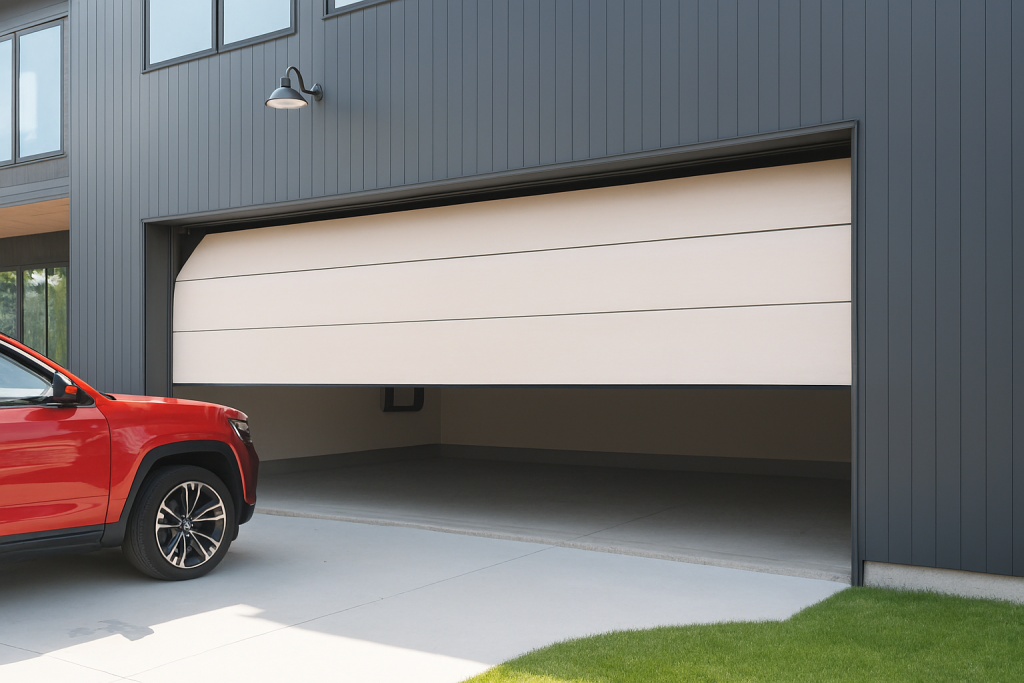
It can be tempting to press the remote one more time to see whether the door will recover. That response can create uncertainty about where the door will stop and whether it remains supported. Avoid operating the opener, forcing the door by hand or using a manual release. Keep vehicles and people out of the opening, especially if the door is not fully closed or looks uneven.
Plan around a door that is out of service
If the door is closed and stable, leave it that way while advice is arranged. If it is open, partly open or appears unstable, prevent people from entering the doorway and explain its position when you call. Do not stand under it, prop it, hold it while another person uses a control or ask someone to watch it while you investigate another component.
Give the technician a clear starting picture
The service enquiry can be concise but useful: explain the door type if known, its current position, the change noticed, whether there was a bang or impact, and whether an opener responded. Mention any visible loose cable, crooked position or damaged section without attempting to photograph or reach components that are not safely accessible.
A technician assessment matters because a spring concern is connected to the whole moving arrangement. The door’s support, balance, path and opener behaviour need to be considered together. Replacing an assumed part or copying an online adjustment may conceal the cause, introduce a mismatch, or make a later inspection harder.
Arrange safe access while you wait
Plan around the affected access point. Use another entrance if available, move necessary items only when it can be done without going through the door opening, and tell household members that the garage door is out of use. This is more reliable than leaving a note that someone may overlook when they arrive by car.
Eastern Garage Doors identifies a heavy door, uneven operation, loud noises and off-track movement among the conditions that should not continue to be operated. Its repair and servicing page also says that springs and cables are high-tension components and are unsafe to repair without appropriate tools, training and experience.
Professional attention is therefore not about making a broad assumption that every noise is a broken spring. It is about recognising that the visible symptoms can overlap, that the condition cannot be confirmed safely by a household inspection, and that the safest next step is to leave the mechanism undisturbed until it can be assessed.
Describe what happened before the fault
The same restraint applies after a power interruption or an awkward parking incident. Neither event gives a homeowner a reason to inspect or reset spring components. If the door had been operating normally before the event but now will not move, say so when requesting help. If it had already been noisy or uneven, include that earlier history because it may help distinguish a new access problem from a pre-existing operating change.
Keep children, visitors and tradespeople informed that the garage door is unavailable. A closed door can look ordinary to someone who did not see the fault, and a remote may still be within reach. Removing the expectation that anyone should “give it a go” is a simple way to prevent repeated operation before an assessment.
Keep the technician’s advice for future use
When the door is inspected, ask for the recommended operating advice for the particular arrangement and store it with the manual. That is more useful than retaining a generic online repair guide. The next safe action will depend on the system that is actually installed, not on a label attached to one visible component. Accurate advice is particularly valuable after the household has seen a fault for the first time. It lets future decisions begin with the actual door condition and a technician’s findings, rather than repeated use of a door whose operating status is still unknown. It also gives every household member the same safe point of reference for future everyday access.
Sources and support
Eastern Garage Doors Garage Door Servicing and Repairs and Eastern Garage Doors Contact Us.
For a garage-door fault or servicing enquiry, contact Eastern Garage Doors with the visible symptoms and the door’s current position.