







Safety & Security
Power Outage? How to Handle Your Garage Door Safely

Mar
Reviewed and updated: 14 October 2026
When the power goes out, the garage door can become the first practical problem at home. The automatic opener may not run, lighting may be poor and the usual driveway routine may suddenly be unavailable. The safest response is to slow down and decide whether the door needs to move at all.
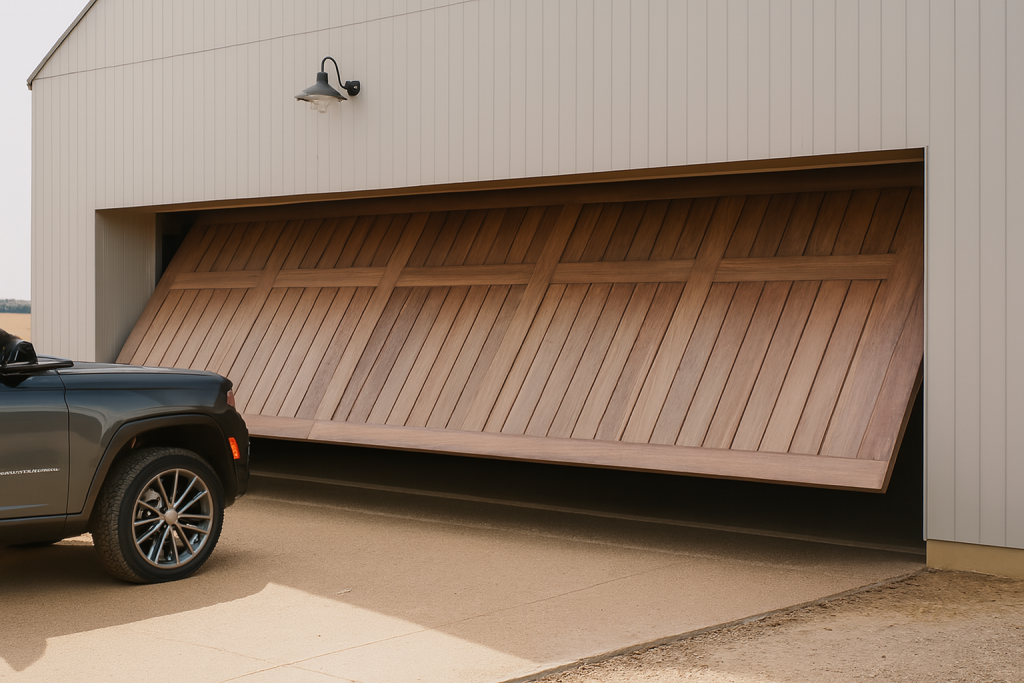
A blackout does not automatically mean a garage door should be opened manually. The condition of the door, the type of door, the exact opener arrangement and the purpose of access all matter. If the door is damaged, partly open, unusually heavy, noisy or sitting unevenly, do not attempt to move it. Use another safe entrance and arrange assistance.
Start with people and visibility
Use a torch rather than a candle or other flame in the garage. Make sure children and pets are away from the opening, and do not allow anyone to stand under a door just to see whether it will move. A person who normally enters through the garage may need to use a different route while the situation is assessed.
Look at the door from a safe distance. Is it closed and sitting normally? Is there obvious damage, a gap, a loose part or a recent change in the way it moved? If there has been a vehicle impact, a loud bang, scraping or a fault before the power went out, treat that as a separate safety issue rather than assuming the blackout is the cause.
Know your setup before an outage happens
The time to learn about a manual release is while the door is operating normally. Merlin’s Australian homeowner support page provides model-specific information, manuals and help. Store the manual with other home documents and note the motor model in a place that can be found without going into the garage.
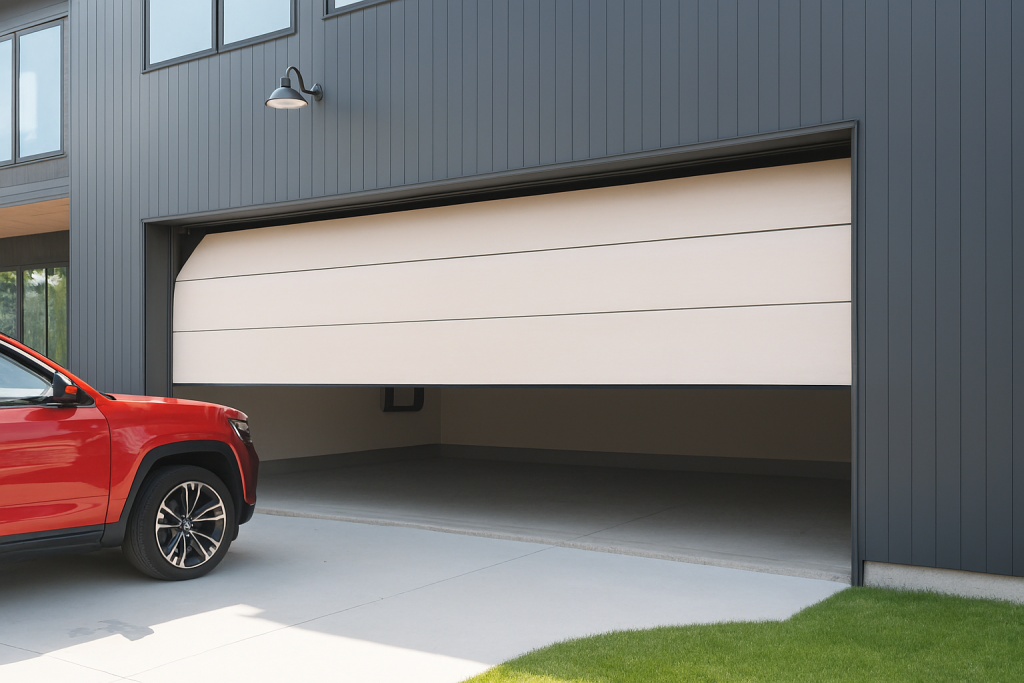
Manual-release and re-engagement instructions differ between door and opener arrangements. A roller door may not have the same process as a sectional or tilt door. Never rely on a generic article, a friend’s recollection or a video for a different model. The exact manual is the source to use, and only when the door is closed, stable and in normal condition.
When not to use a manual release
Do not release a door that is open or partly open, that appears unstable, or that has any sign of a spring, cable, guide or impact problem. Do not pull a release cord to ‘see what happens’. Do not try to hold a door while someone else operates a control. A manual release disconnects the opener; it does not make an unsafe door safe to move.
Do not force a door that resists movement. Do not change force settings, travel limits or wiring because the opener is unavailable. Those actions can create a separate fault and may make the door harder to assess once power is restored.
Prepare a useful call for assistance
If you need professional help, give the door type, the current position of the door and the reason access is needed. Mention any visible damage, abnormal sound or previous fault. If a Merlin opener is fitted, provide the model number if it is safe to read. State whether a vehicle is inside and whether another entrance keeps the property secure.
That description lets the service provider understand whether the issue is only a loss of power or whether the door has a condition that should remain out of use. Avoid promising yourself a particular repair or response time based on an article. Availability and the required work can only be confirmed after the provider understands the situation.
After power returns
Do not assume the door is ready simply because electricity is back. Re-engage or test the system only in the way described by the exact owner manual. Keep the doorway clear and stop if the movement is different from normal. If the door does not respond as expected, do not continue pressing remotes or reset controls by guesswork; contact Merlin support or a qualified technician.
For the next blackout, keep a torch, manual location and alternative entry plan ready. That small preparation makes it easier to choose a safe response without turning a temporary power outage into a garage-door incident.
Keep the blackout plan simple
There is no need to make the garage door the centre of every outage plan. Decide in advance which household door can be used if the garage is unavailable and make sure keys or access devices for that entrance are accessible. Tell household members that the garage door is not to be tested during an outage unless the exact manual applies and the door is clearly safe. This reduces the chance that one person releases a door while another is nearby or assumes the remote will work.
It is also worth separating an access problem from a mechanical problem. A closed, stable door with a working manual may be managed differently from a door that had been noisy for days, was struck by a vehicle or is sitting crooked. The blackout does not erase those facts. When speaking to a technician, lead with the condition of the door rather than the inconvenience of the outage.
Protect normal access habits
Many garage-door incidents begin with ordinary routines carried into an unusual situation: reversing toward a door that will not open, walking under it while somebody else activates it, or leaving the opening unsecured while looking for a remote. Pause those routines until power and normal operation are restored. Keep vehicles clear of the door, keep the garage floor free of loose objects and do not use the opening as a waiting area.
Sources and support
Find Merlin manuals and model-specific homeowner assistance at Merlin Australia homeowner support. Contact Eastern Garage Doors through its contact page.