






Safety & Security
Garage Door Springs: Warning Signs That Need a Technician

Jan
Reviewed and updated: 14 October 2026
Garage-door springs do important work in the background. They help counterbalance the door so that its movement can be controlled by the door system and its opener. They are also loaded components. That is why an article about warning signs should lead to a safe decision, not to a set of adjustment steps.
If you think a spring may be involved in a garage-door problem, stop using the door and arrange a professional inspection. Do not try to identify the exact spring type, test the balance or make the door ‘feel right’ again. Different door designs use different arrangements, and even a familiar-looking system can be unsafe to handle without the right assessment.
Changes that deserve prompt attention
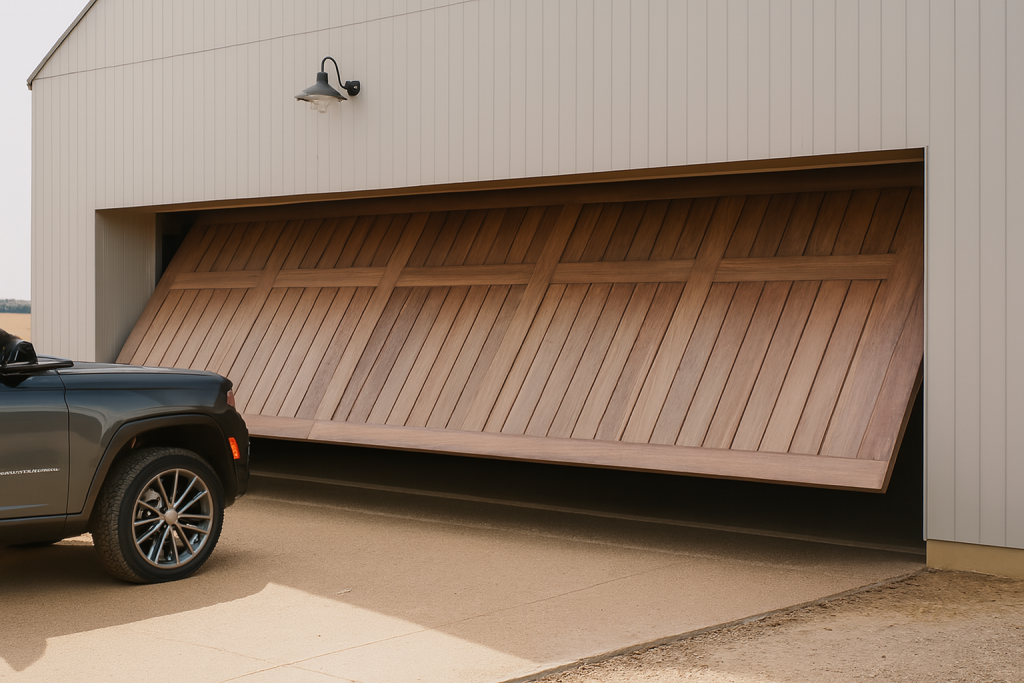
A sudden bang near the garage-door assembly is one reason to stop and take stock, especially if the door then moves differently. Other warning signs include an opener that appears to struggle, a door that does not rise or close normally, a door that feels unusually heavy, a change in how it sits in the opening, or visible damage around the spring and hardware area.
It is tempting to connect a symptom to a single part. In practice, a noisy or slow door can have more than one cause, and a spring issue may affect other components. The important distinction is between observing what changed and attempting to diagnose it. You can give a technician useful facts without standing close to the mechanism or touching it.
Stop use rather than ‘checking the balance’
Advice to disengage the opener and lift the door by hand is not an appropriate general test for a homeowner. A door that is not correctly supported can move unexpectedly, and the manual-release procedure differs between door and opener arrangements. Do not pull a release cord to investigate a suspected spring issue. Do not push the door, hold it open, or test whether it stays at a particular height.
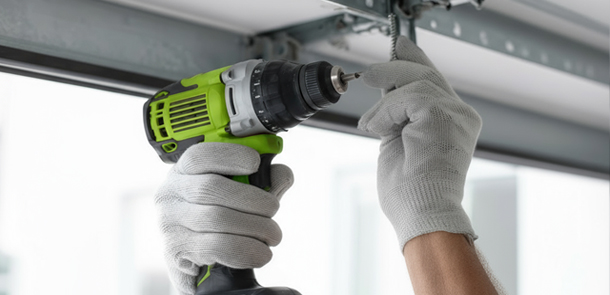
Similarly, do not adjust spring tension, loosen brackets, turn hardware or place tools into the mechanism. These actions can introduce a serious hazard without resolving the underlying cause. Repeatedly pressing a remote or wall control is also a poor workaround. If the system has changed, more cycles may put extra strain on a door that needs inspection.
Make the space safer
Keep children, pets and vehicles away from the doorway. Do not walk or stand beneath an open or partly open door that appears abnormal. Where practical, use another entrance to the property until the door has been assessed. If the door is closed and can be left closed without further operation, that may be the safest arrangement; if you are uncertain, explain the position of the door when booking assistance.
You may take a photo of visible damage from a safe distance. There is no need to obtain a close-up of a spring, cable or bracket. A clear image of the door in the opening, along with the direction in which it last travelled and the time the problem began, can be enough to help a technician understand the call.
Information to have ready
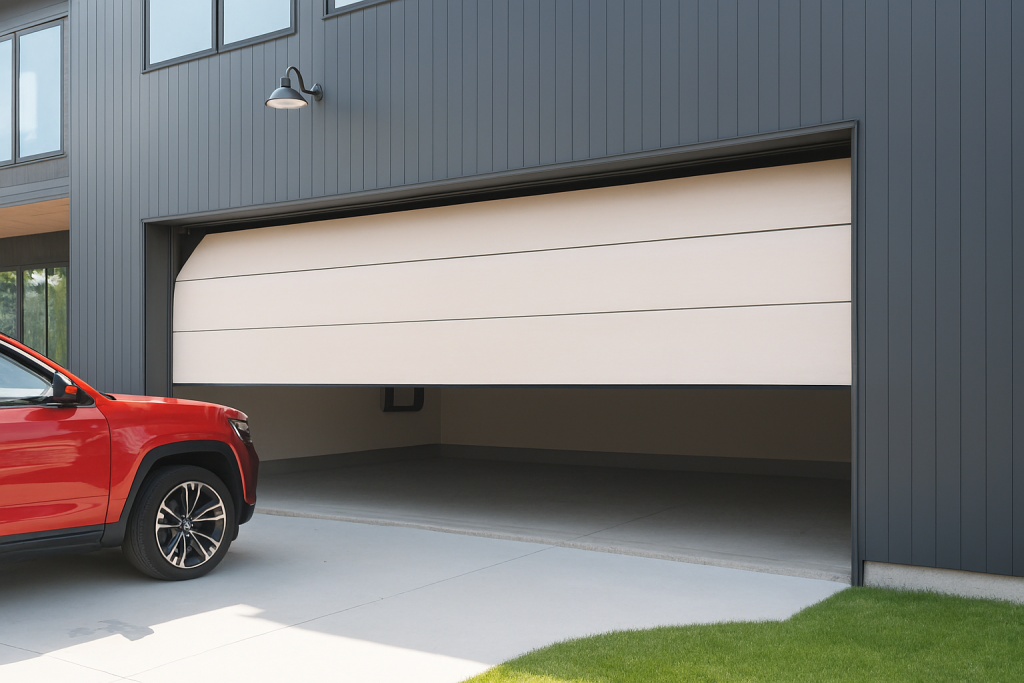
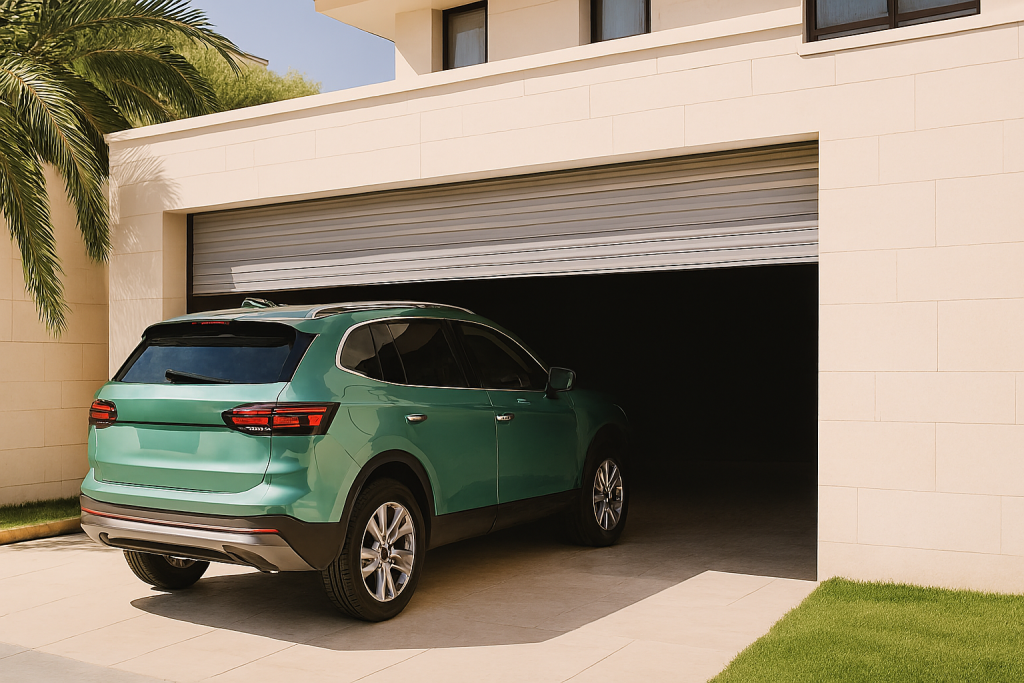
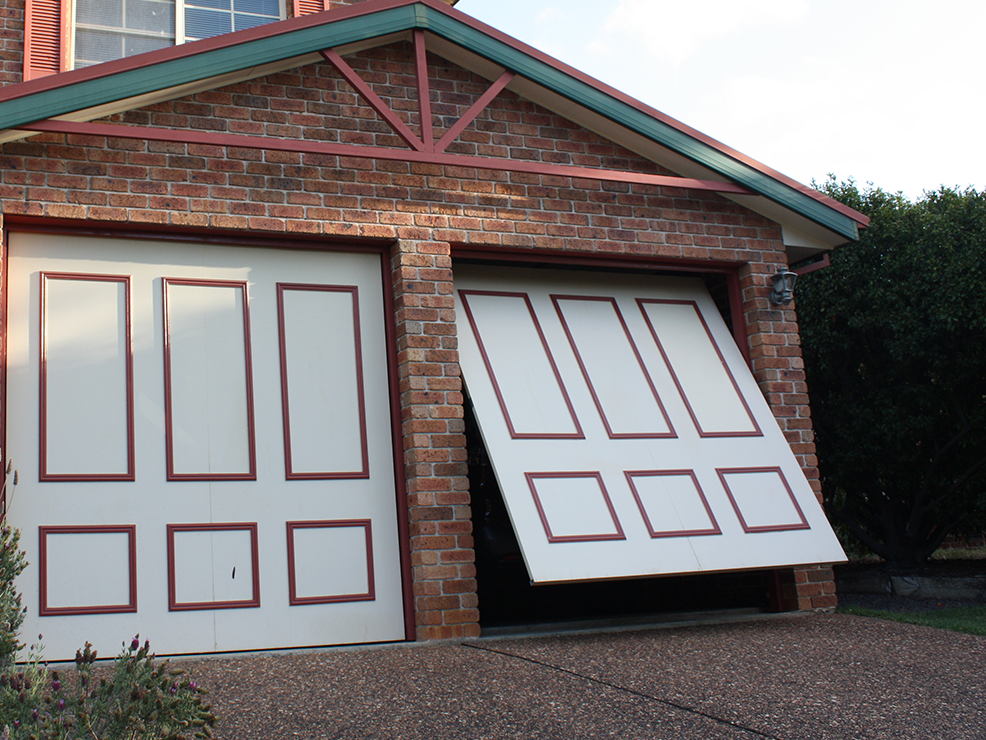
Note the type of door, whether it is a roller, sectional or tilt arrangement, and whether a Merlin opener is fitted. If the opener model can be read without entering the path of the door, record it. Describe what happened in plain language: ‘there was a loud noise and the door would not open’, ‘the motor now strains’, or ‘the door no longer closes normally’.
Also mention recent events that may be relevant, such as a vehicle impact, unusual weather, a power outage or an earlier period of increasing noise. Avoid making claims about which component has failed. The service provider should inspect the door and its counterbalance system before deciding what work is required.
Use the right source for Merlin information
Merlin’s Australian homeowner support provides manuals, troubleshooting and dealer assistance for specific models. It is useful for confirming normal operator controls and identifying a model. It does not turn a loaded mechanical repair into a do-it-yourself task. Merlin states that garage-door servicing should be carried out by a qualified dealer, and the exact manual should be used for model-specific questions.
After a professional has assessed the issue, keep the service information with the door and opener documents. That record can make future maintenance decisions more informed. Until then, a suspected spring fault has one clear homeowner action: keep the door out of use, keep people clear and arrange qualified help.
Do not rely on a quiet period
A door can appear settled after a bang or a difficult cycle, but that does not establish that the condition has resolved. Avoid deciding that the fault has disappeared because the next button press seems ordinary. The system may still be affected, and another movement can happen when somebody is nearby or when access is needed urgently. Keep the original observations, including the time of the event and any visible change, and pass them on at assessment. This is a safer use of the information than using it to decide which hardware to touch.
Keep that boundary clear: visible information belongs in the booking, while loaded hardware belongs in the assessment. That protects the people using the home and preserves a clearer starting point for the technician.
Sources and support
Read Merlin’s current Australian homeowner support information at Merlin homeowner support. Contact Eastern Garage Doors through its Eastern Garage Doors contact page.