






Repairs & Maintenance
Roller Door Repairs: Symptoms That Need a Professional Assessment

Nov
Reviewed and updated: 14 October 2026
A roller door often provides a large, frequently used entry to a home or garage. When it changes sound, movement or position, the right response is to observe the symptom and arrange suitable assessment rather than trying to correct it at the opening. Roller doors can involve loaded springs, cables, guides, a moving curtain and, when automated, electrical equipment. Those systems need professional attention when their operation is no longer normal.
Start with symptoms you can observe safely
Use ordinary daily operation as the opportunity to notice change. From a safe position with a clear view of the opening, watch whether the door moves smoothly as usual, whether it sounds different, or whether it reaches its usual closed position. A new rattle, rubbing sound, uneven travel, shaking, delay or unexpected stop is worth recording. It is not necessary to run the door again and again to confirm a symptom. Repeated operation can increase risk when the underlying condition is unknown.
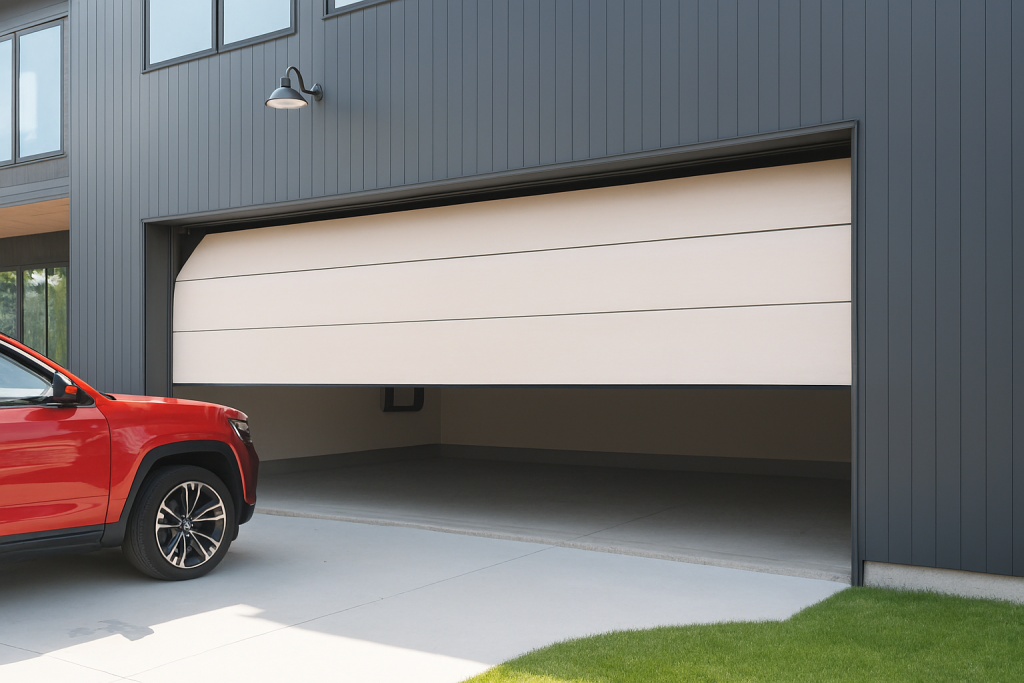
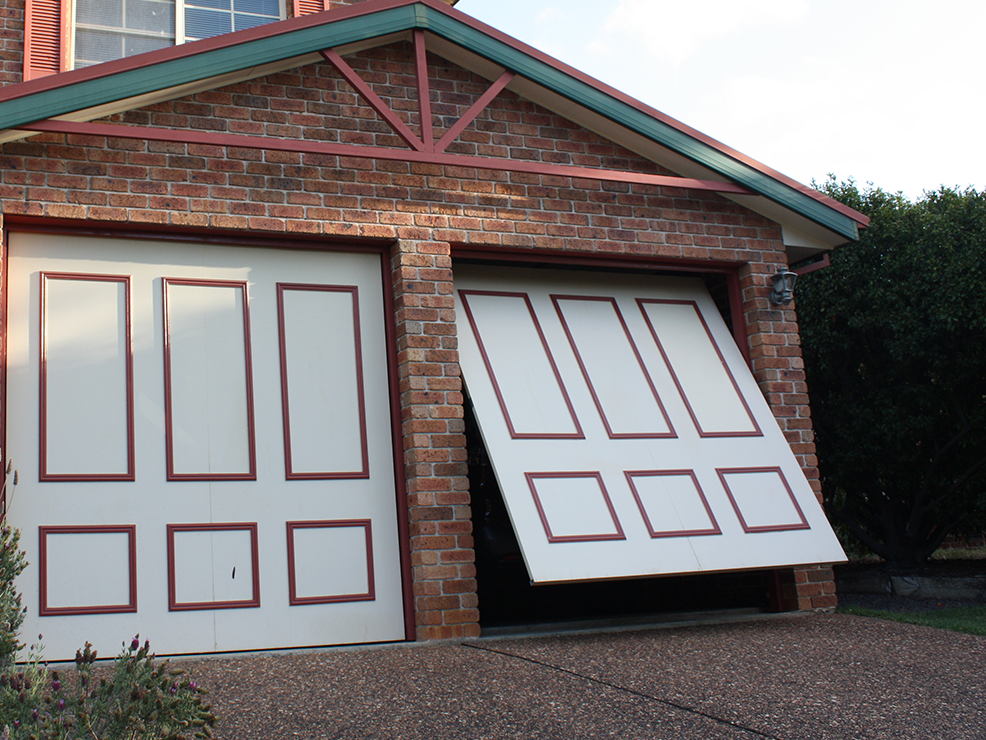
Visible condition matters as well. With the door closed and stationary, look from a distance for dents, a changed gap at an edge, damaged curtain sections, a seal that looks affected, or a door that appears to sit differently in the opening. Take a safe-distance photo if it will help explain the concern. Do not climb, reach into guides, touch cables, remove covers or work around the upper door area to investigate.
Keep the threshold and travel area clear
Low-risk housekeeping supports safe use. Clear loose leaves, bins, garden equipment, toys, bikes, boxes and other storage from the threshold and nearby opening while the door is stationary. Do not lean stored items against the inside of the door. Keep enough space for a vehicle to stop clear before the door is operated. These practices keep the opening usable and make it easier to see a change in condition.
Housekeeping is not roller-door repair. Do not clean inside guides, lubricate parts, straighten curtain sections, tighten fittings or attempt to free something caught in a location that cannot be safely reached while the door stays still. If debris or an object is trapped near moving components, leave it alone and seek advice. Do not use a closing door to compress, move or test an obstruction.
Know the faults that mean stop using the door
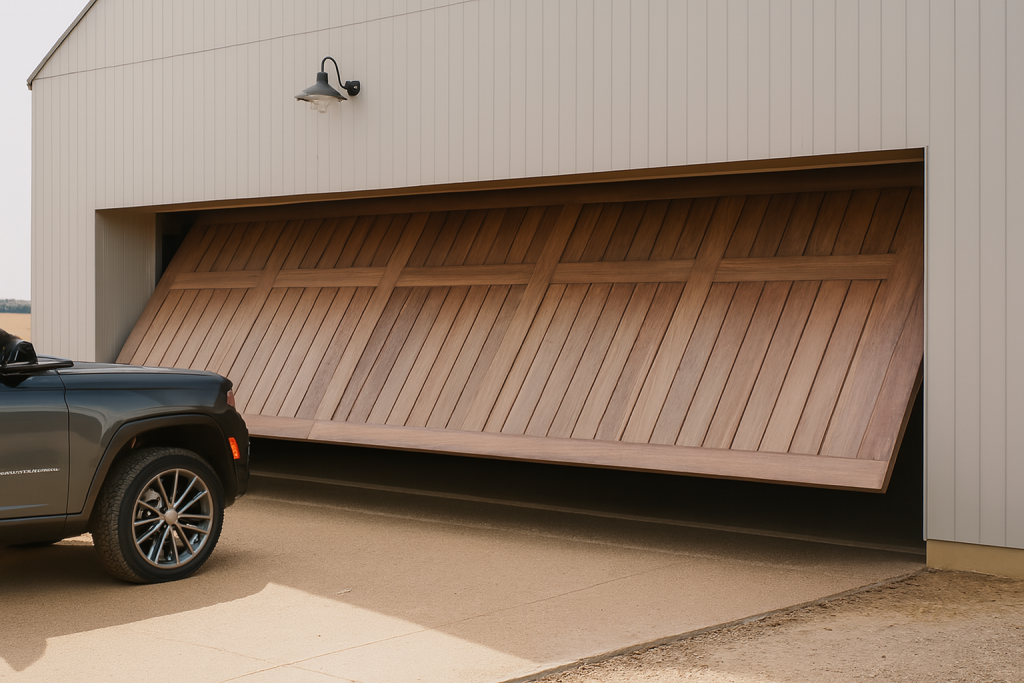
Stop operation if a roller door is damaged, moves unevenly, looks off its usual path, makes unfamiliar or excessive noise, appears heavy, fails to close normally or responds unpredictably to a remote or wall control. Treat a loose-looking, frayed or displaced cable, a changed spring or an abnormal guide or curtain as a stop-use sign. Keep people, vehicles and stored items clear of the opening. Do not pull a cable, touch a spring, force the door, attempt to guide it by hand or make an adjustment.
An open, stuck or unstable door needs an exclusion area. Do not stand beneath it, drive under it or try to prop it into position. A closed and stable door can normally be left closed while advice is arranged. If access is urgent, explain the door’s current position and visible symptoms when you call. Another entrance, temporary parking or moving valuable items away from the opening may be the safer short-term option.
Do not troubleshoot the mechanics
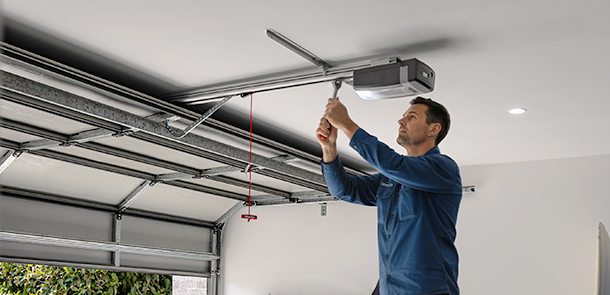
Springs, cables, curtain movement, guides, brackets and balance are connected parts of a moving system. Work on one can affect the others. Do not attempt replacement, tensioning, adjustment or repair. The same applies to automatic opener force settings, travel limits, wiring and internal components. The fact that a problem appears after a power interruption, impact or wet weather does not make it a homeowner electrical or mechanical task.
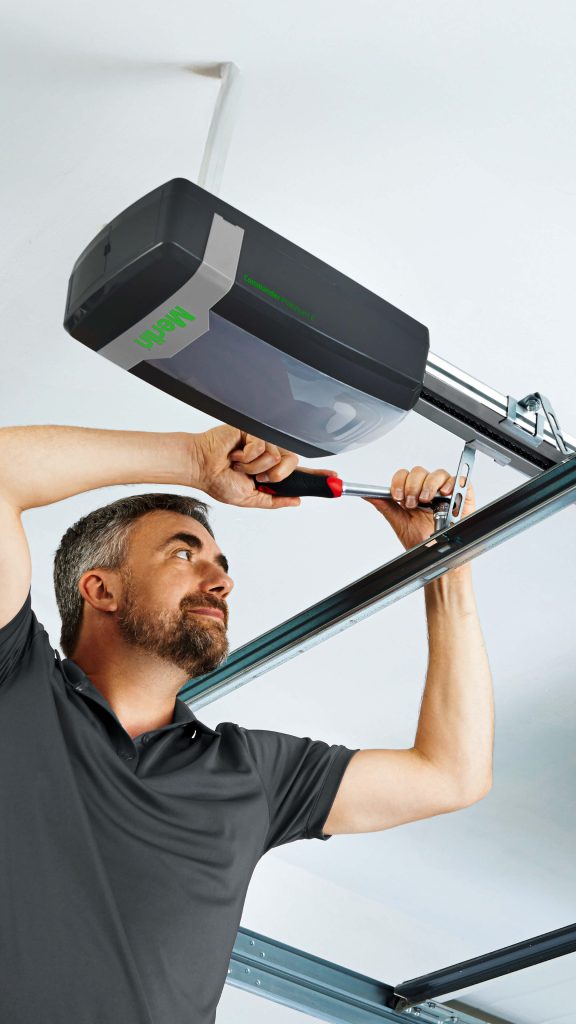
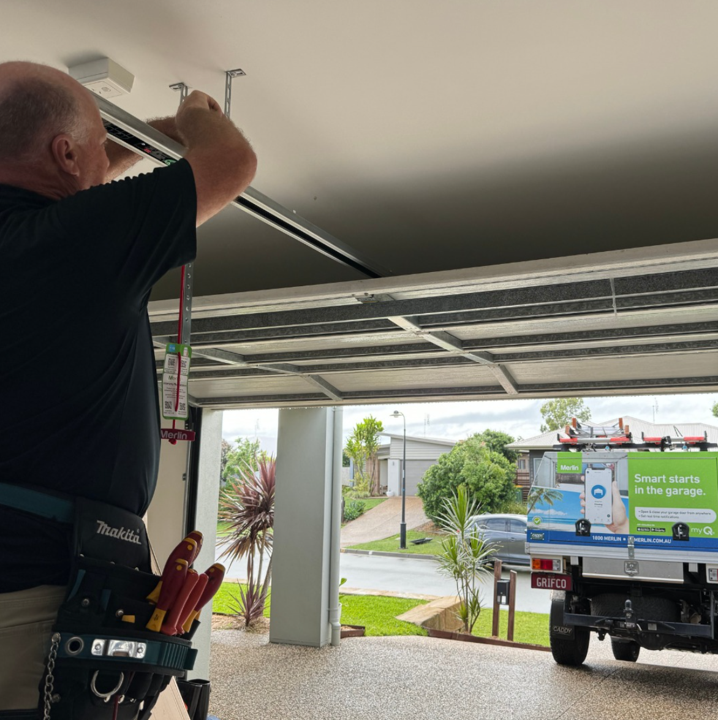
If a Merlin opener is fitted, record its model number only if it is visible from a safe position. Merlin’s homeowner support has manuals and model-specific help for ordinary controls. Use that material to identify the product or seek assistance, not to work on a damaged or abnormal door. Merlin advises that garage-door servicing should be carried out by a qualified dealer for safe operation.
Use controls with full supervision
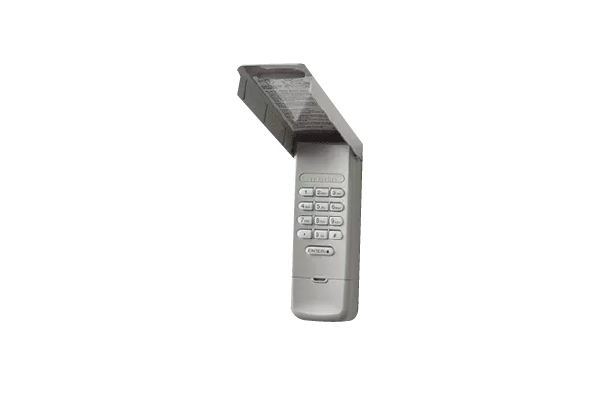
The person using a remote, wall control or compatible connected feature should be able to see the complete opening and wait for normal movement to end. Do not operate a roller door while walking or driving away. Do not allow children to play with controls, and keep remotes in controlled locations rather than visible in an unattended vehicle. A notification, sound or light is not a substitute for looking at the doorway.
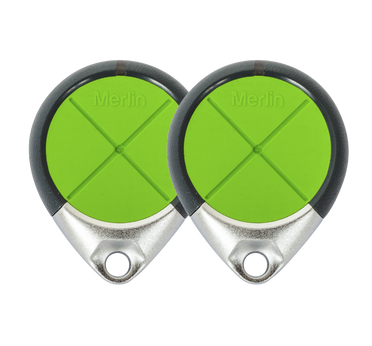
Review who has access to the garage. Where a remote is lost, damaged or no longer needed, use model-specific support or ask a dealer for help. Do not assume that a similar remote is appropriate, and do not use a control problem as a reason to reset electrical settings. Keep a record of the opener model, the controls in use and the support contact path.
Prepare a clear repair enquiry
Good information helps a technician assess the problem. Record when the symptom started, whether there was recent weather, vehicle contact, a power event or nearby building work, and whether the door is currently open, closed or stuck. Describe what happens during ordinary use without repeatedly operating the door. Include safe-distance photos of visible damage, the door type if known and the Merlin opener model if it can be seen safely.
Eastern Garage Doors provides servicing and repairs for garage doors. The appropriate action depends on the condition found on site, so it is safer to avoid assumed diagnoses or promises about cost, timing or an upgrade. A professional can determine whether the issue concerns the curtain, guides, supporting hardware, opener or another part of the installation.
Keep repairs in perspective
Not every sound or mark requires the same response, but every change deserves sensible context. A stable, closed door with a minor visible concern can be described in a routine service enquiry. A door that cannot close normally, appears unstable or shows abnormal mechanical behaviour should be treated as urgent from a safety perspective. The owner’s useful contribution is to keep the area clear, prevent further use and pass on accurate observations.
This approach protects people and avoids turning a manageable repair into a more serious access or safety issue. It also gives the technician the information needed to assess the actual installation rather than a problem guessed from generic advice. Do not work on springs, cables, force or electrical parts: keep clear and let an appropriate professional assess the roller door.
Sources and support
See Eastern Garage Doors servicing and repairs, Eastern Garage Doors contact details and Merlin homeowner support.
For a roller-door fault, contact Eastern Garage Doors with the visible symptoms and current door position.