






Repairs & Maintenance
Garage Door Repair in Melbourne: A Safety-First Homeowner Guide

Nov
Reviewed and updated: 14 October 2026
A garage door that is behaving differently deserves attention before it becomes an inconvenience or blocks access altogether. A new scrape, uneven movement, unexpected reversal or a remote that no longer works consistently can have several causes. The safest response is to observe the symptom, protect the area around the door and arrange an informed assessment. It is not to keep cycling the door in an attempt to make the fault disappear.
This guide helps Melbourne homeowners decide what information to collect and when to stop using a door. It does not provide instructions for repairing springs, cables, tracks, opener settings or other moving components. Those systems can carry significant force, and a seemingly small adjustment can create a serious hazard.
Notice changes in normal operation
Most owners learn what normal movement sounds and looks like for their own garage door. Pay attention when it begins to travel unevenly, hesitates, makes a new grinding or scraping sound, fails to close as expected, reverses unexpectedly or feels different when controlled. Visible damage after a vehicle impact, loose-looking hardware, a hanging cable or a door that appears out of alignment also warrants prompt professional advice.
Write down the symptom rather than trying to diagnose the part. Include when it began, whether it happens on every cycle, what control was used and whether anything changed near the garage. An existing recording may help explain the movement. Do not operate a suspect door just to make a video; use a safe-distance photograph of its present condition instead.
Know when to stop using the door
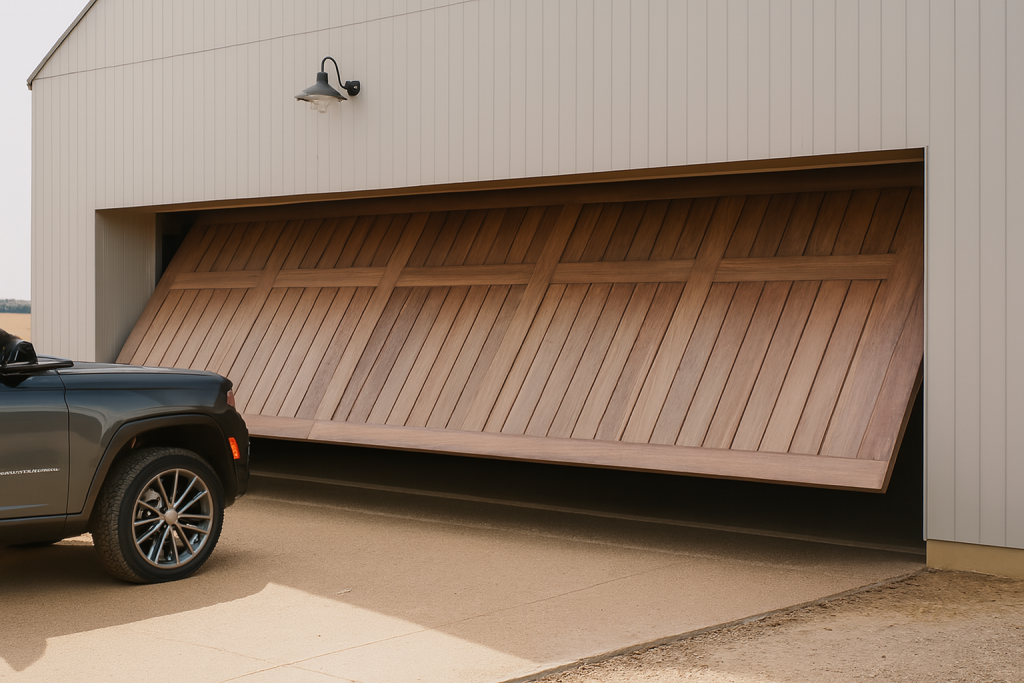
Stop operating the door if it is moving unpredictably, appears damaged, is partly off its normal path, has a broken or loose-looking cable, or will not remain in a stable position. Keep people, pets, vehicles and stored items out of the opening. If it has stopped partway, explain its position when arranging assistance rather than trying to force it open or closed.
A powered door is not made safe simply because a remote still triggers the motor. Repeated testing can worsen damage or place someone in the path of a heavy moving panel. Do not pull a release cord, disconnect the motor or attempt a balance check unless a qualified person has given model-specific instructions for the immediate situation. Never alter springs, cables, tracks, brackets or force settings as a household repair.
Separate an access problem from a door problem
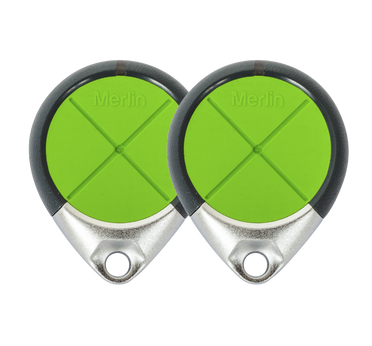
Sometimes the issue is limited to a remote or control. If the door operates normally from another authorised control, note that fact. Follow the relevant Merlin owner’s instructions for a remote battery only if the door itself is working normally and the manual identifies the battery and method. A lost or damaged remote requires an access review as well as a replacement discussion.
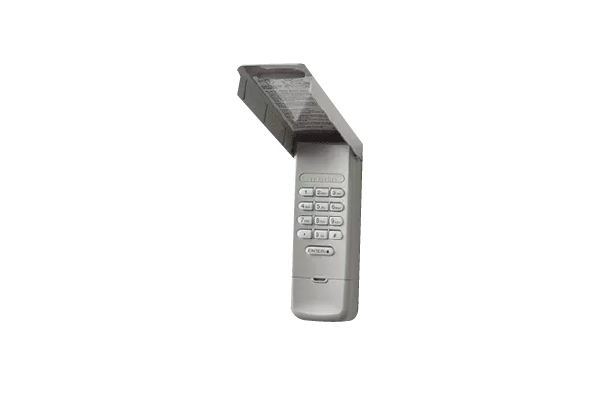
If the opener makes an unusual sound, the door moves poorly, a wall control also fails, or the response is intermittent, do not assume the issue is only a remote. The opener, door and supporting hardware work together. Give the technician the exact Merlin model, the door type and the observed behaviour so they can assess the whole arrangement rather than arriving with an assumed spare part.
Make the space safe for an assessment
Clear vehicles, bicycles, boxes and other belongings away from the door’s travel path if doing so does not require operating the door or reaching near damaged components. Keep the driveway and internal floor area as clear as practical. If safe access is blocked by a stuck door, say so when booking; do not manoeuvre underneath it to tidy the garage.
Keep children and pets away from the work area and do not leave a remote where it could start an inspection unexpectedly. Turn the conversation towards site facts: the door’s current position, whether power is available, any recent impact, visible damage and access limitations. That information helps the technician prepare without an owner attempting a risky preliminary repair.
Prepare useful repair information
Have the door type, opener model, age of any known installation work, service records and photographs ready. Mention whether the issue followed a power interruption, a change to storage, building work, water around the garage or a contact with a vehicle. Do not make an old weather event or the age of the home the assumed cause; simply provide the history for assessment.
Ask the technician to explain the condition found, the work proposed and any parts that require replacement. A clear scope distinguishes what will be repaired from what remains outside the visit. If an upgrade or accessory is suggested, ask why it is relevant to this door and whether compatibility or safety requirements apply. This helps homeowners compare options without turning a fault into an automatic full-system replacement.
Keep records after the repair
Retain the invoice, model details, work description and owner guidance with the property records. Note any operating advice and the date the symptom was reported. These records give the next assessment useful context, particularly when a different issue appears later. They are more useful than a generic promise about how long every component should last.
Eastern Garage Doors can assess garage-door faults and discuss repair options for Melbourne properties. When you contact the team, describe the symptom, door position and model details, and tell them if the opening needs to remain out of use for safety.